A Cleveland Family's Guide to Long Term Care Insurance Options in 2025
-
TL;DR: Top LTC Insurance Choices
-
Traditional Policies (Mutual of Omaha): Best for dedicated LTC coverage if you are healthy and don't need life insurance. Premiums are paid for a specific care benefit.
-
Hybrid Policies (Nationwide, Lincoln Financial): Combine life insurance with LTC benefits. This avoids the "use it or lose it" problem, as the policy pays for care or provides a death benefit.
-
Marketplaces (Policygenius): A good starting point to compare quotes from multiple companies at once without contacting each one separately.
-
Government Info (LongTermCare.gov): An unbiased, official resource to learn the basics before you talk to an agent. It explains Ohio-specific rules like the Partnership Program.
Who This Helps
This guide is for families in Greater Cleveland (including Cuyahoga, Lake, Lorain, Geauga, Medina, and Summit counties) who are exploring assisted living or memory care and need to understand how to pay for it. If you're feeling stressed and short on time, this article will give you clear, calm, and solution-oriented answers about your long term care insurance options.
Key Takeaways
-
Traditional vs. Hybrid: Traditional LTC insurance is purely for care costs. Hybrid policies bundle life insurance with LTC benefits, so your premium is never "wasted."
-
Ohio's Partnership Program: Buying a qualifying LTC policy in Ohio can help you protect more of your assets if you ever need to apply for Medicaid later.
-
Costs are Local: Care costs in Northeast Ohio are high. An insurance policy can help cover the monthly fees for assisted living, which often include a base rate plus extra charges called level-of-care fees (costs for additional help with daily activities).
-
Planning is Crucial: The best time to buy LTC insurance is when you are younger and healthier. Waiting too long can make it difficult or impossible to qualify.
1. Mutual of Omaha: The Traditional Stand-Alone Policy
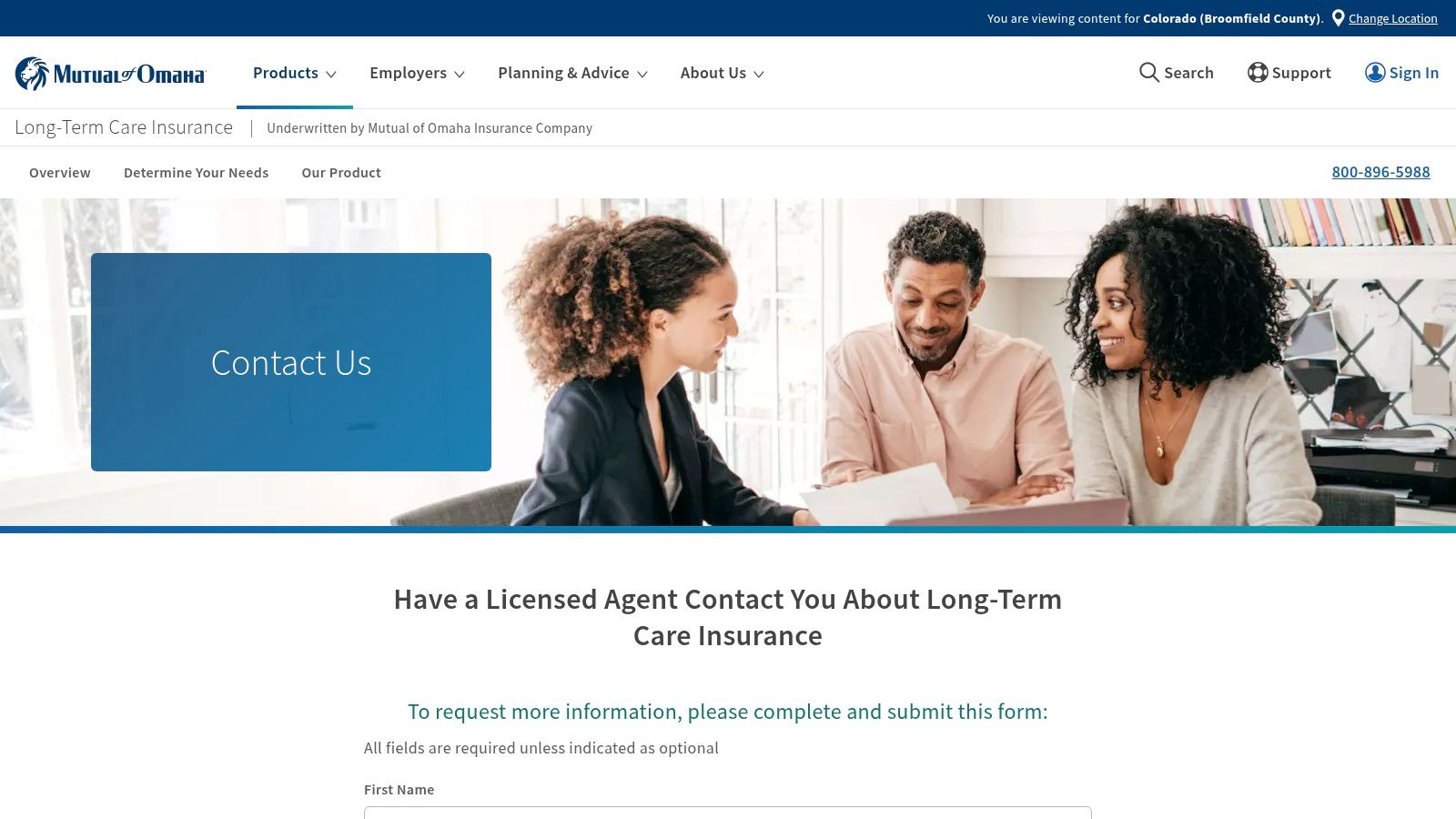
For families in Greater Cleveland seeking a dedicated, traditional insurance policy specifically for long-term care expenses, Mutual of Omaha is one of the most prominent names. Unlike hybrid policies that combine life insurance with LTC benefits, Mutual of Omaha’s product is a stand-alone policy. This makes it a straightforward choice for those who want a policy designed exclusively to cover costs for assisted living, memory care, or in-home care.
This approach is best for individuals who have separate life insurance and want a specific tool to pay for potential long-term care needs. The company is a major national carrier with strong financial ratings, offering stability when planning decades into the future.
Key Features and How It Works
Mutual of Omaha’s website is a starting point to connect with a licensed agent. You cannot get an instant quote online. The process involves submitting your contact information to have a local agent, who is licensed in Ohio, reach out to you. This is because these policies are complex and require personalized underwriting based on your health.
Key features you can customize with an agent include:
-
Benefit Amount: You choose a maximum monthly benefit the policy will pay for care.
-
Benefit Period: You select the total length of time the policy will pay out, such as two, three, or five years.
-
Inflation Protection: This is a crucial feature. You can choose options to make your benefit grow over time, helping it keep pace with rising care costs.
-
Elimination Period: This is like a deductible. It's the number of days you pay for care out-of-pocket (e.g., 90 days) before the policy benefits begin.
What this means for you: A traditional policy like this offers predictability. If you qualify, you pay a consistent premium for a pre-defined benefit. It’s a direct solution for the specific problem of funding long-term care.
Pros and Cons for Ohio Families
| Pros | Cons |
| --------------------------------------------------------------------------- | ----------------------------------------------------------------------------- |
| Focused Coverage: Dedicated solely to LTC costs, often providing richer benefits for the premium compared to hybrid policies. | "Use It or Lose It" Model: If you never need long-term care, the premiums paid are not returned and there is no death benefit. |
| High Customization: Flexible design allows you to tailor benefits and inflation riders to your budget and projected needs. | Medical Underwriting: You must be in relatively good health to qualify; it's not guaranteed issue. |
| Financial Strength: As a large, highly-rated insurer, there is confidence that the company can pay future claims. | Agent-Required Process: You must work through a licensed agent to get pricing or apply. |
Website to Get Started: https://www.mutualofomaha.com/long-term-care-insurance/contact
2. New York Life: Flexibility with Traditional and Hybrid Options
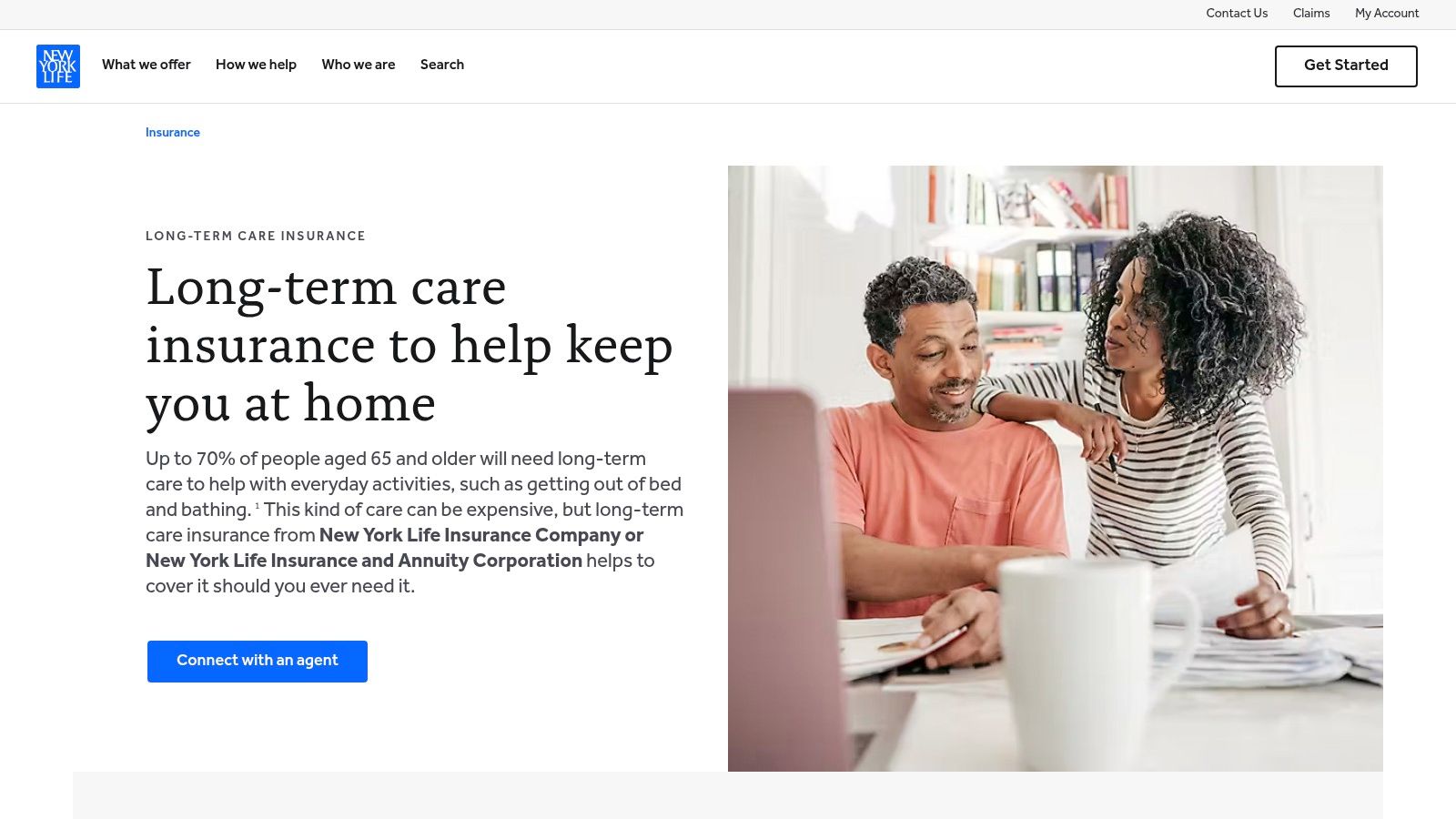
For Cleveland-area families who value stability and want to explore multiple types of long term care insurance options, New York Life is a foundational choice. The company provides both traditional LTC policies and modern hybrid solutions. This dual approach allows you to work with a single, highly-rated insurer to find the structure that best fits your financial goals, whether that’s pure protection or a multi-purpose asset.
This flexibility is ideal for individuals who are unsure which policy type is best. New York Life's agent-guided model ensures that families in Cuyahoga, Lake, and surrounding counties receive personalized advice tailored to Ohio’s specific regulations and care costs.
Key Features and How It Works
New York Life’s website is a resource for learning, not a platform for purchasing. The process centers around connecting you with a licensed agent who can explain their products.
An agent will help you navigate features such as:
-
Choice of Policy Type: You can select a traditional, stand-alone LTC policy or a hybrid life insurance policy with an LTC rider.
-
Comprehensive Coverage: Policies are designed to cover a wide range of services, from in-home care to stays in an assisted living community or a dedicated memory care unit.
-
Inflation Protection: You can select from various inflation riders to help your benefit pool grow over time, protecting your purchasing power.
-
Couple’s Discounts: New York Life often provides discounts for spouses or partners who apply for coverage together.
What this means for you: With New York Life, you aren't forced into one model. You can directly compare a "use it or lose it" traditional plan against a hybrid plan that guarantees a benefit (either for care or as a death benefit) and make an informed decision with professional guidance.
Pros and Cons for Ohio Families
| Pros | Cons |
| --------------------------------------------------------------------------- | ----------------------------------------------------------------------------- |
| Wide Menu of LTC Options: Access both traditional and linked-benefit policies from a single, financially stable carrier. | Agent-Required Process: You must work with an agent and cannot get instant quotes or apply online. |
| Potential for Discounts: Eligible policies may offer discounts (like for couples). | Potential Premium Increases: Traditional LTC policies may be subject to future premium rate increases. |
| Strong Carrier Reputation: New York Life is one of the oldest and highest-rated mutual life insurance companies. | Medical Underwriting: Qualification is not guaranteed and requires a thorough health assessment. |
Website to Get Started: https://www.newyorklife.com/products/insurance/long-term-care-insurance
3. Northwestern Mutual: The Integrated Financial Planning Approach
For Cleveland-area families who see long-term care planning as part of a broader financial strategy, Northwestern Mutual offers an integrated, advisor-led approach. Their model often incorporates long-term care benefits into life insurance products (hybrid policies). This method is designed for individuals who want to ensure their plan serves multiple purposes, providing a death benefit for heirs if long-term care is never needed.
This approach is best suited for those looking for comprehensive financial guidance that covers retirement, investments, and insurance under one roof. Northwestern Mutual is a large, highly-rated mutual company, which appeals to those who prefer a long-term, relationship-based planning process.
Key Features and How It Works
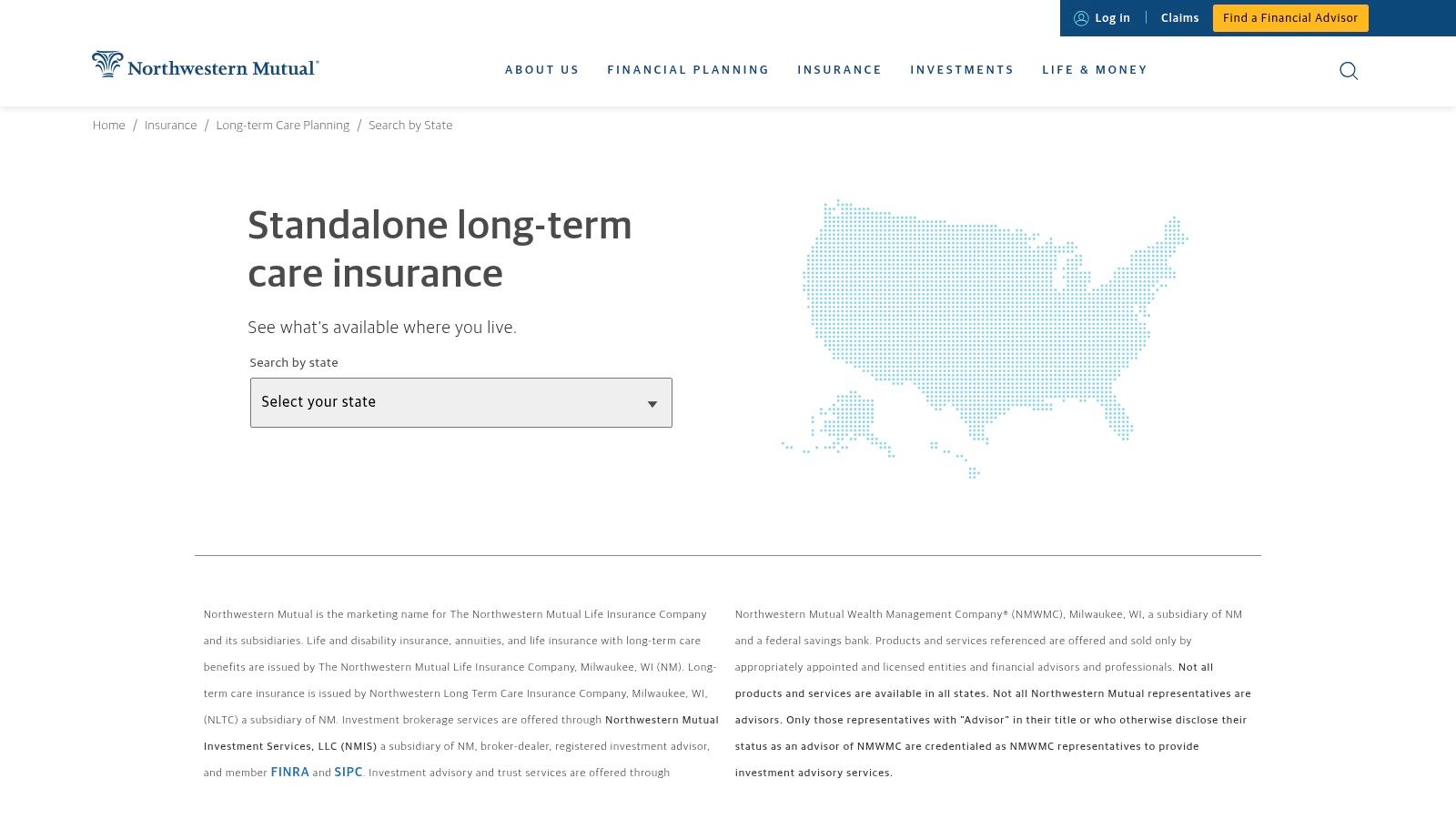
Northwestern Mutual’s website connects you to their network of financial advisors. You cannot get quotes online; the process is built around consultation. A key tool on their site is the state-by-state availability search, which shows which products are offered in Ohio.
Key features you’ll discuss with an advisor include:
-
Hybrid and Stand-Alone Options: While known for hybrid policies, they also offer access to traditional LTC policies in Ohio, providing flexibility.
-
Advisor-Led Planning: An advisor will conduct a full financial review to see how LTC fits into your overall goals, including retirement income and estate plans. As you integrate long-term care into your financial strategy, it's also wise to consider understanding various estate planning forms.
-
Guaranteed Premiums: Certain hybrid products may offer guaranteed premiums that will not increase over time.
-
Dividend Potential: As a mutual company, eligible policies may receive dividends, which can be used to offset premiums or increase policy value.
What this means for you: This is a comprehensive planning process. The goal is to create an efficient financial plan where your premium dollars provide either a death benefit or LTC funding, ensuring the money is never "wasted."
Pros and Cons for Ohio Families
| Pros | Cons |
| ------------------------------------------------------------------------------------------------ | ----------------------------------------------------------------------------------- |
| Integrated Financial Strategy: LTC is considered within your complete financial picture, not in isolation. | Advisor-Required Process: You must work with an advisor; no option for self-service or online quotes. |
| No "Use It or Lose It" on Hybrids: Hybrid policies provide a life insurance death benefit if you never need LTC. | Product Availability Varies: Not all products are available in every state, though Ohio has good options. |
| Financial Strength and Dividends: High ratings and the potential for dividends offer stability and potential value. | Potentially Higher Premiums: Hybrid policies can be more expensive than stand-alone LTC for the same level of care benefits. |
Website to Get Started: https://www.northwesternmutual.com/long-term-care-planning/search-by-state/
4. Nationwide (CareMatters Together)
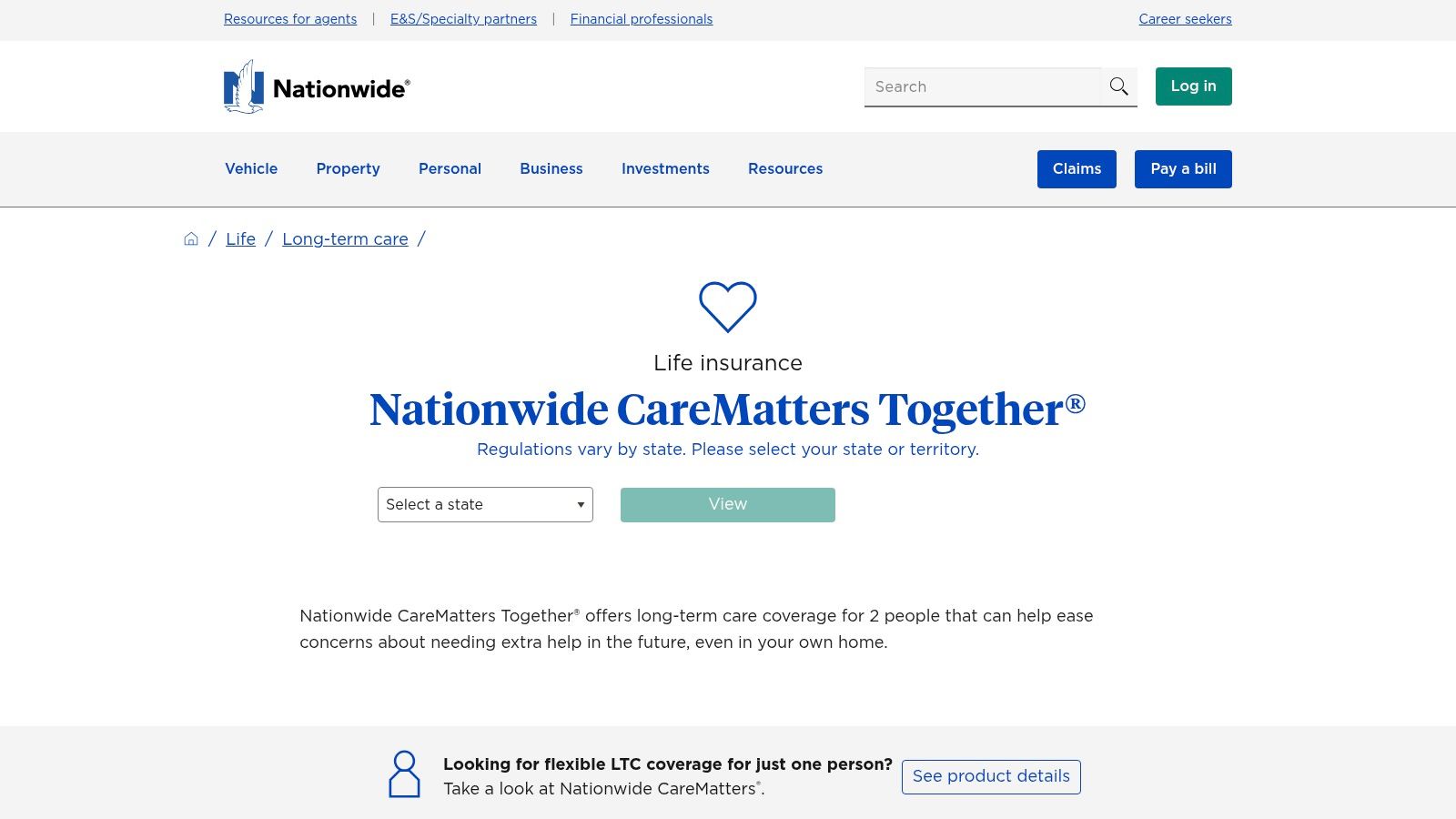
For Cleveland-area families looking for flexibility, Nationwide’s CareMatters Together product offers a modern, hybrid approach. It is a linked-benefit policy, combining a life insurance policy with a long-term care (LTC) benefit. This structure addresses the common "use it or lose it" concern of traditional policies.
This policy is particularly notable for its cash-indemnity model. Once you qualify for benefits, Nationwide provides a pre-determined monthly cash payment. You are not required to submit receipts. This gives families in Northeast Ohio significant freedom in how they manage care, including the ability to pay informal caregivers like family members.
Key Features and How It Works
Nationwide’s website provides educational material but does not offer online quotes. To explore this option, you must connect with a licensed insurance professional who can guide you through the application and underwriting process.
Key features you will discuss with an agent include:
-
Cash Indemnity Benefit: After meeting the elimination period, you receive a monthly cash benefit to use as you see fit for care-related expenses.
-
Informal Caregiver Payments: The policy explicitly allows funds to be used to compensate family members or other informal caregivers.
-
Guaranteed Death Benefit: A death benefit is paid to your beneficiaries even if you use the entire pool of LTC funds.
-
Inflation Protection Options: You can add riders to increase your benefit pool over time to keep up with the rising costs of care.
What this means for you: A cash-indemnity hybrid policy offers maximum flexibility. It allows you to tailor care to your specific needs, such as hiring a trusted neighbor or family member for assistance, rather than being restricted to agency-only services.
Pros and Cons for Ohio Families
| Pros | Cons |
| --------------------------------------------------------------------------- | ----------------------------------------------------------------------------- |
| Cash-Indemnity Model: Simplifies the claims process and offers total flexibility in how care funds are spent. | Agent-Required Process: You cannot get instant quotes online; you must work with a licensed insurance professional. |
| Ability to Pay Family: Officially allows for the compensation of informal caregivers, a key benefit for home-based care plans. | Complex Product: As a hybrid policy, it can be more complex to understand than a stand-alone LTC plan. |
| No "Use It or Lose It": The policy pays out either as LTC benefits or a death benefit, guaranteeing a return on your premium. | Medical Underwriting Required: Approval is based on your health history and is not guaranteed. |
Website to Get Started: https://www.nationwide.com/personal/insurance/life/long-term-care/carematters-together/
5. Lincoln Financial (MoneyGuard): The Hybrid Life and LTC Policy
For Cleveland-area families who want LTC coverage without the "use it or lose it" risk, Lincoln Financial's MoneyGuard products are a leading hybrid solution. These are linked-benefit policies that combine a life insurance policy with an LTC rider. This guarantees your premiums provide value, either through LTC benefits, a death benefit, or a return of premium if you change your mind.
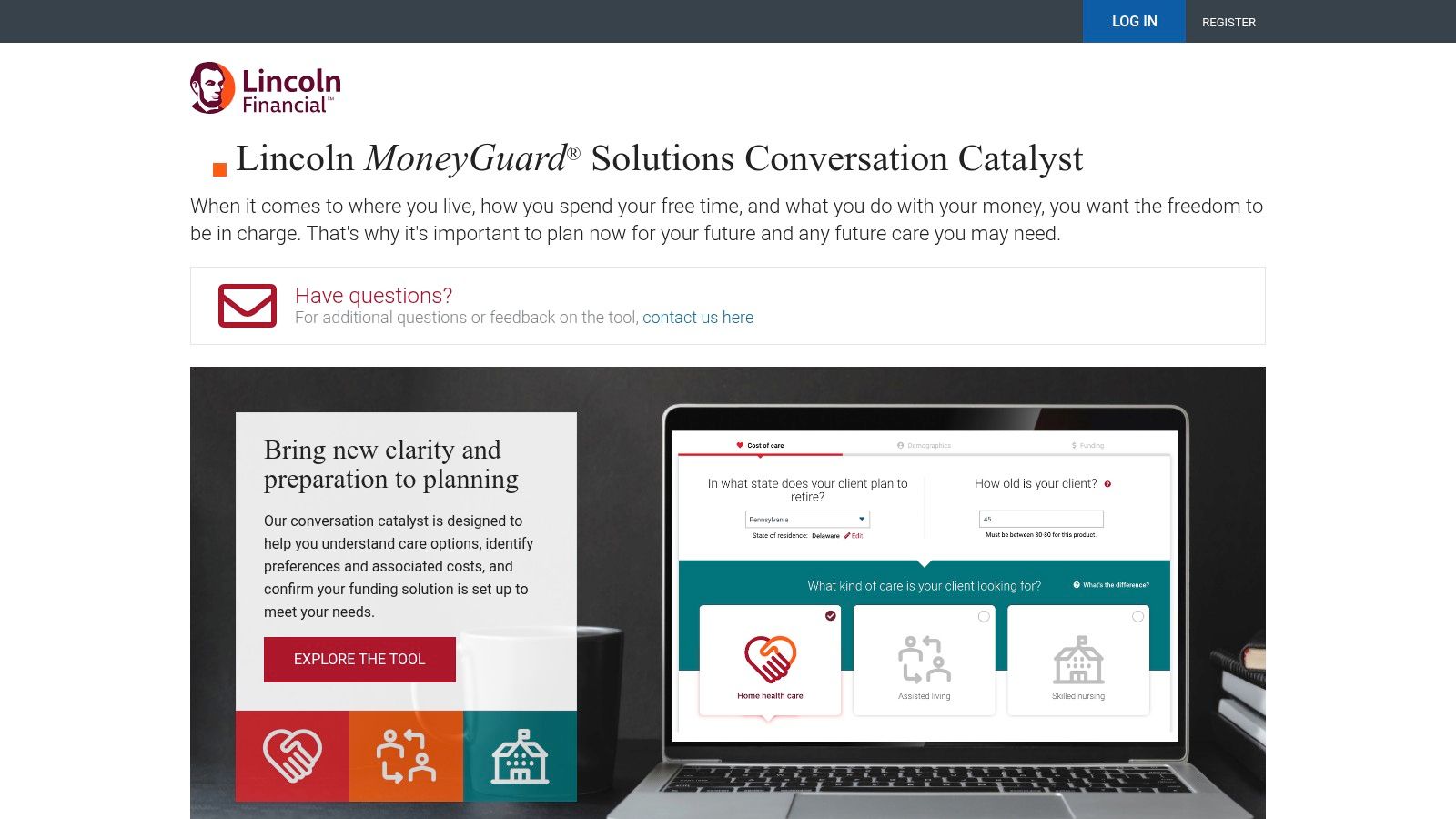
This approach is ideal for individuals who want to consolidate their planning. Their products are designed to provide a pool of money that can be accessed for care needs, which is critical when facing the high senior living costs in Cleveland.
Key Features and How It Works
Lincoln Financial’s website serves as an informational tool and a portal to find a licensed financial professional. You cannot get a quote or apply directly online.
Key features you’ll discuss with an advisor:
-
Linked-Benefit Structure: Your premium funds a life insurance policy that has a long-term care rider.
-
Payment Flexibility: Some versions offer a choice at the time of claim between reimbursement (submitting receipts) and cash indemnity (receiving a pre-set cash amount).
-
Guaranteed Payout: The policy is structured so that benefits are paid out through LTC claims, a life insurance death benefit, or a return of premium.
-
State Availability: The website shows which versions of the MoneyGuard product are available in Ohio, setting clear expectations.
What this means for you: A hybrid policy like MoneyGuard solves two problems at once. It provides a dedicated fund for potential long-term care needs while also leaving a tax-free legacy for your beneficiaries if care is never required.
Pros and Cons for Ohio Families
| Pros | Cons |
| --------------------------------------------------------------------------- | ----------------------------------------------------------------------------- |
| No "Use It or Lose It" Risk: Guarantees a payout as either LTC benefits, a death benefit, or a return of premium. | Higher Premiums: Premiums are typically higher than stand-alone LTC policies for a comparable benefit amount. |
| Flexible Benefit Payouts: Options for cash indemnity on some products provide more control over how care funds are spent. | Advisor-Required Process: You must work with a financial professional and cannot get quotes directly online. |
| Established Brand: Lincoln Financial has a long history and strong reputation in the linked-benefit insurance market. | State-Specific Products: Not all product features or versions are available in Ohio, requiring careful review. |
Website to Get Started: https://www.lincolnfinancial.com/public/microsite/mgmatool
6. Policygenius: The Online Insurance Marketplace
For Greater Cleveland families starting their research, the number of long term care insurance options can feel overwhelming. Policygenius is an online insurance marketplace that simplifies this initial phase. Rather than representing a single insurer, it provides a platform to learn about coverage and connect with specialists who can provide quotes from multiple insurance companies.
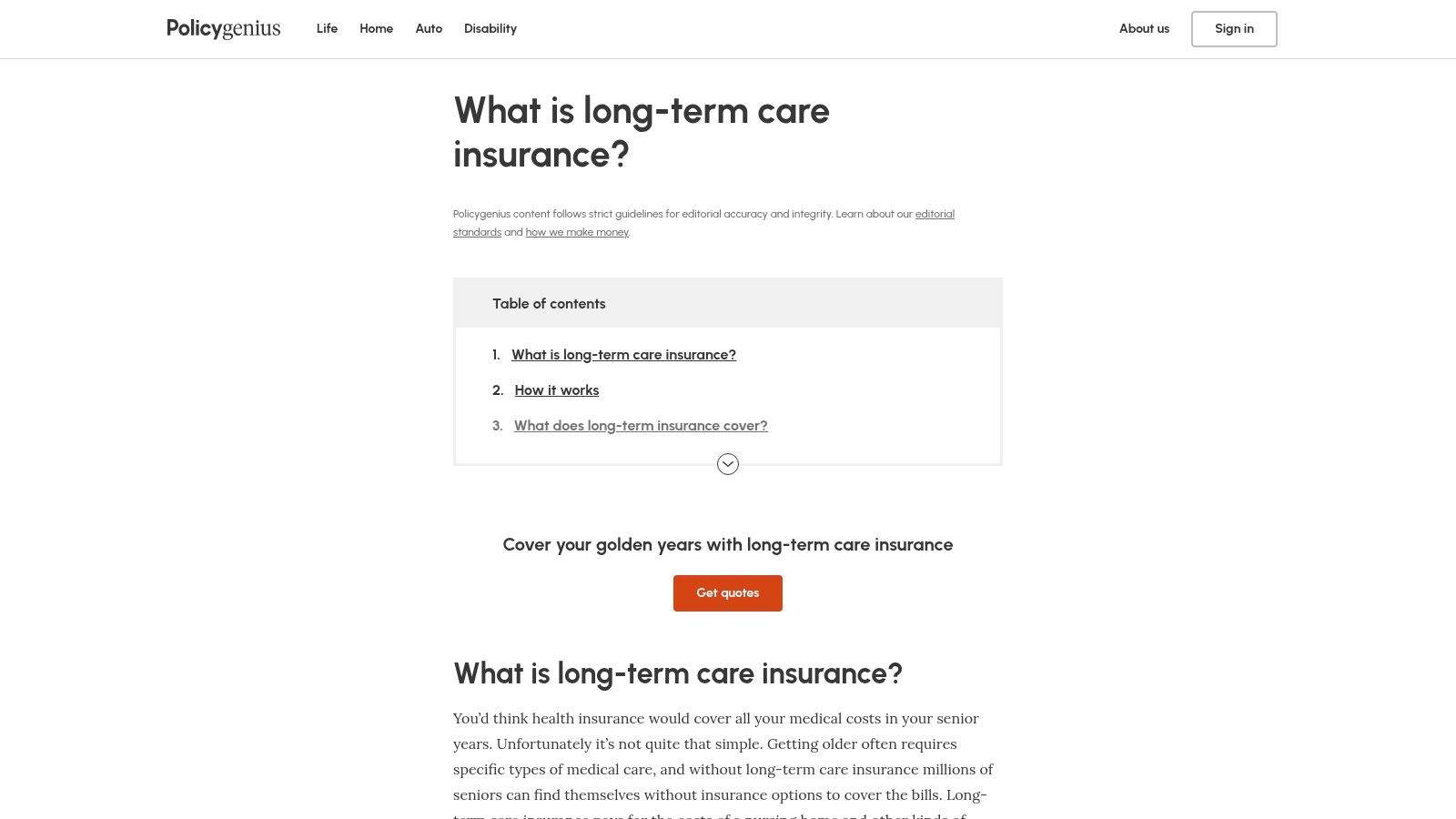
This approach is ideal for those who want to compare the market without contacting several different agents individually. Policygenius helps you see how offerings from various carriers stack up, making it a powerful tool for initial education and comparison shopping.
Key Features and How It Works
Policygenius is a licensed broker that partners with a network of top-rated insurance companies. The process begins with an online form where you provide basic information. Based on your input, you are connected with a licensed agent who specializes in long-term care insurance.
This expert can then:
-
Compare Multiple Carriers: Access quotes from several insurers, allowing you to compare costs and benefits side-by-side.
-
Navigate Underwriting: Provide guidance on the medical underwriting process.
-
Provide Education: Clarify complex features like inflation protection riders.
-
Match Products to Needs: Help you decide whether a stand-alone traditional policy or a linked-benefit product is a better fit.
What this means for you: Using a marketplace like Policygenius saves time and provides a broader view of available options. Instead of getting one quote from one agent, you can efficiently survey the landscape to find a competitive policy tailored to your needs in Ohio.
Pros and Cons for Ohio Families
| Pros | Cons |
| --------------------------------------------------------------------------- | ----------------------------------------------------------------------------- |
| Simplifies Comparison Shopping: Easily compare quotes and features from multiple carriers through a single point of contact. | Not All-Inclusive: The platform does not represent every LTC carrier, so some options may not be presented. |
| Educational Resources: Excellent for first-time buyers who need to understand the fundamentals of LTC insurance. | Agent-Based Model: You still must work with a licensed agent to finalize a policy; it’s not a fully self-service purchase. |
| No Cost to Compare: There is no fee for using the platform to get information and compare quotes from its partners. | Indirect Process: You are connected to partner agents rather than working directly with Policygenius. |
Website to Get Started: https://www.policygenius.com/long-term-care-insurance/
7. LongTermCare.gov (Administration for Community Living)
Before diving into quotes, the smartest first step for any Ohio family is to build a foundational understanding of long-term care. For this, LongTermCare.gov, a website managed by the U.S. government, is an unparalleled, unbiased resource. It does not sell any products; its sole purpose is to provide clear information to help you make an informed decision.
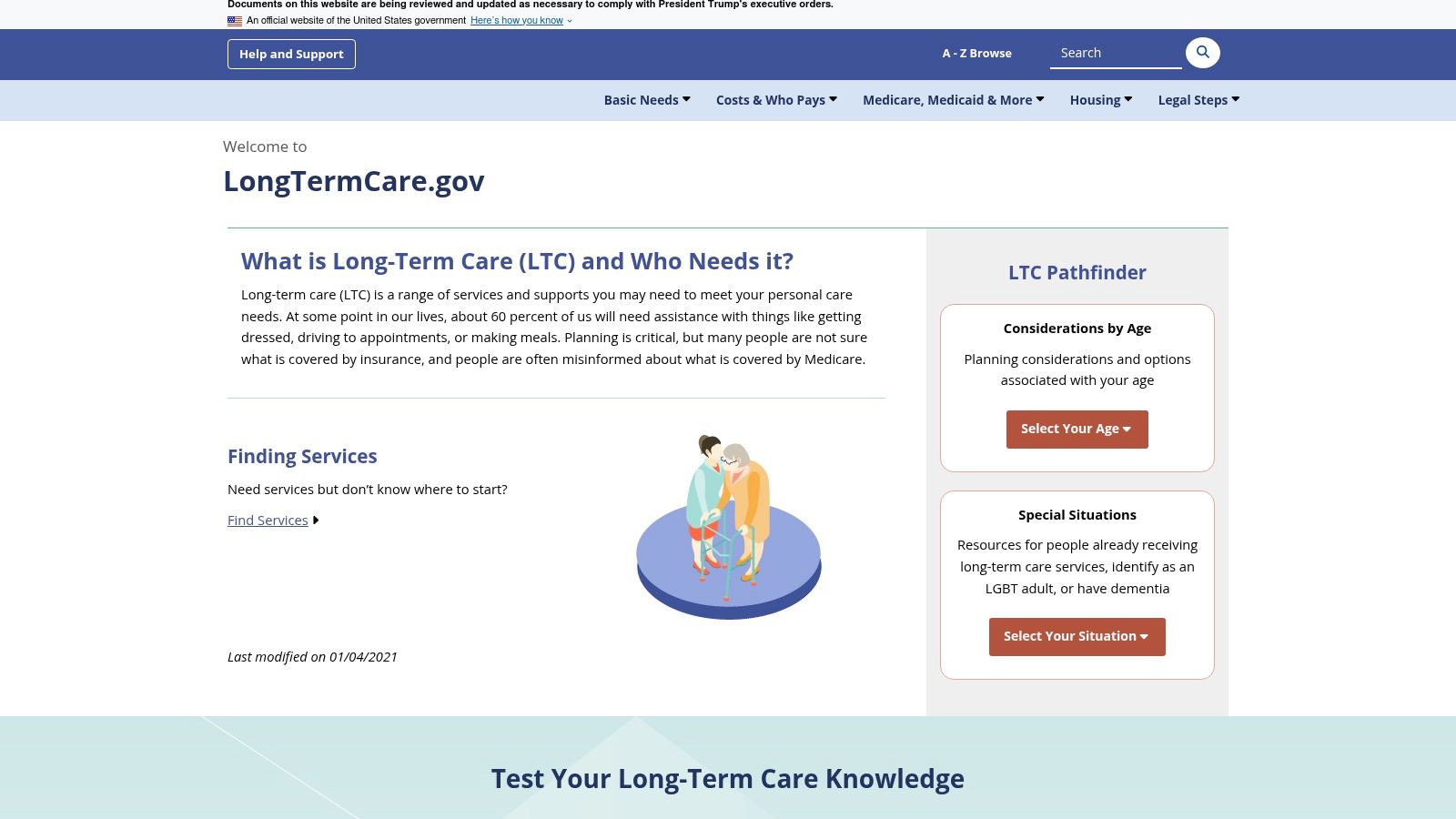
This government-run site is a pre-shopping educational hub. It helps families in Greater Cleveland understand the landscape, learn the terminology, and identify key questions to ask before speaking with an insurance agent.
Key Features and How It Works
LongTermCare.gov is a self-guided educational tool. Key resources include:
-
Basics of LTC: Clear explanations of what long-term care is, who needs it, and what the potential costs are.
-
How Insurance Works: A detailed breakdown of policy features like benefit triggers, elimination periods, and inflation protection in plain English.
-
State Partnership Programs: Critical information on Ohio's Long-Term Care Insurance Partnership Program, which helps protect your assets from Medicaid spend-down requirements if you purchase a qualifying policy.
-
Finding a Policy: Guidance on where to look for licensed insurers and agents.
What this means for you: This site is your starting point. By spending an hour here, you'll be better prepared to evaluate complex policies. Understanding the state partnership program is vital for any Ohio resident. Learn more about how Medicaid and asset protection interrelate in Ohio.
Pros and Cons for Ohio Families
| Pros | Cons |
| --------------------------------------------------------------------------- | ----------------------------------------------------------------------------- |
| Authoritative & Unbiased: As a government source, the information is trustworthy and free from commercial influence. | Informational Only: You cannot get quotes, compare specific carrier products, or purchase a policy on the site. |
| Excellent Pre-Shopping Education: Equips you with the knowledge to ask smart questions and understand complex policy terms. | General Guidance: It explains state programs but does not provide specifics on a carrier's Ohio-based policy features. |
| Partnership Program Details: Clearly explains the significant asset protection benefits of Ohio's LTC Partnership program. | No Agent Connection: The site does not connect you directly with local agents in the Cleveland area. |
Website to Get Started: https://acl.gov/ltc/
What to Do Next
Making a choice can feel difficult, but taking small, concrete steps will build your confidence. Here is a checklist to guide your immediate next steps.
Example: A family in Cuyahoga County is looking for assisted living for their mother. Her only income is Social Security, but she owns her home. They use the checklist below to get organized. They complete a financial inventory (Step 1), then meet with an elder law attorney (Step 2) to discuss how selling the home would impact future eligibility for Ohio's Medicaid Assisted Living Waiver (AL Waiver), a program that helps pay for care in an Assisted Living (Residential Care Facility). This helps them decide whether to use the home sale proceeds to pay for care directly or to purchase a small insurance policy.
Your Action Plan Checklist
-
1. Complete a Financial Inventory: Before you can assess any insurance product, get a clear picture of all assets (savings, investments, property) and income (pensions, Social Security). This is the foundation for determining what you can afford and if you might qualify for aid programs later.
-
2. Consult a Fiduciary Financial Advisor: A professional specializing in long-term care planning in Ohio can run personalized quotes and show you how a policy would fit into your overall retirement strategy. They are legally required to act in your best interest.
-
3. Talk to a Certified Elder Law Attorney: This is essential if you think Medicaid might be needed in the future. An attorney can give specific advice on spend-down strategies and protecting assets in a way that is compliant with Ohio law, helping you avoid penalties.
-
4. Get a Professional Care Assessment: To understand what level of care is needed now and in the future, schedule an assessment with a geriatric care manager or a primary care physician. This documentation is needed for both insurance applications and programs like the AL Waiver.
Choosing how to pay for long-term care is one of the most significant financial decisions a family can make. By taking these deliberate, informed steps, you are moving from a place of uncertainty to one of empowerment.
Frequently Asked Questions (FAQ)
1. What’s the difference between Assisted Living and a Nursing Home?
In Ohio, Assisted Living (officially called a Residential Care Facility) is state-licensed and designed for people who need help with daily activities like meals and medication management. A Skilled Nursing Facility is federally regulated by CMS and provides 24/7 medical care for people with complex health needs.
2. What is the Medicaid Assisted Living Waiver (AL Waiver)?
The AL Waiver is an Ohio Medicaid program that helps eligible, low-income seniors pay for care in an assisted living facility. It has strict financial and medical eligibility rules. As of 2024, an individual must require a nursing facility level of care but choose to receive it in a participating assisted living community instead.
3. When is the best time to buy long term care insurance?
Generally, the best time is in your 50s or early 60s. At this age, you are more likely to be in good health and qualify for coverage, and premiums will be lower than if you wait.
Disclaimer: This article is for informational purposes only and is not legal, financial, or medical advice. Please consult with licensed professionals for guidance on your specific situation.
Feeling overwhelmed trying to match these options with specific assisted living communities in Northeast Ohio? The team at Guide for Seniors can help you understand which communities accept the AL Waiver, private pay, or long-term care insurance, saving you hours of research. Connect with a local Senior Living Advisor for free, personalized guidance at Guide for Seniors.
Need Help Finding Senior Living in Greater Cleveland?
Our Greater Cleveland local advisors compare pricing, schedule tours, and answer your questions — completely free.