Finding Memory Care Facilities Near Me: A Cleveland Insider's Guide
-
Who This Helps: Greater Cleveland families (Cuyahoga, Lake, Lorain, Geauga, Medina, Summit) who feel overwhelmed by the search for memory care.
-
The Problem: Glossy brochures and sales pitches all sound the same, making you terrified of choosing the wrong community for a loved one with dementia.
-
The Goal: This guide cuts through the marketing fluff. We'll give you the insider questions and local knowledge needed to move from stressful research to a confident decision.
-
The Bottom Line: You don't have to do this alone. A local, Cleveland-based advisor can provide current pricing and availability, saving you weeks of frustrating work.
Staring at a stack of brochures can feel completely overwhelming. If you've been typing “memory care facilities near me” into a search bar, trying to make sense of options from the East Side to the West Side, you know that all the marketing claims start to blur together. This guide is designed to be your trusted insider, cutting through the noise and giving you a clear path forward.
How to Find the Right Memory Care in Cleveland
This guide is for Greater Cleveland families who are feeling the stress and confusion that comes with this search. You’re holding brochures that show off chandeliers and fancy dining rooms, but what you really need are straight answers. While brochures highlight the amenities, you need to ask about the weekend staffing ratios, the specific dementia training the aides receive, and the latest state inspection report from the Ohio Department of Health.
It’s hard to do this alone because every facility claims to be the best, leaving you to figure out what’s real and what’s just marketing fluff. The truth is, making the wrong choice is costly—and not just in terms of money. It costs you time and immense emotional energy.
A Costly Mistake We See Often: A family in Solon spent three weeks touring facilities, only to find out their top choice didn't accept the Ohio Medicaid Assisted Living (AL) Waiver. A quick check with a local advisor at GuideForSeniors.com would have saved them that time and heartache.
Our goal is to be your personal concierge, not just a librarian handing you a list. Think of us as your neutral, local insiders who help you look past the sales pitch and focus on what really matters for your loved one’s quality of life.
Why Does This Feel So Hard?
Finding the right community isn’t just about the location. It's about matching a very specific set of needs with the right environment, the right staff, and the right culture. It’s a tough process for a few key reasons:
-
Confusing Lingo: Communities often throw around terms like "assisted living," "residential care facility (RCF)," and "memory care" as if they're the same. They aren’t. In Ohio, each one represents a different level of care and state licensing.
-
Hidden Costs: That price you see on the brochure? It’s almost never the final monthly bill. "Level of care" fees are usually added on and can increase your costs dramatically.
-
Too Many Choices: With dozens of communities across Cuyahoga, Lake, and Lorain counties, just knowing where to start feels impossible.
A Better Way to Find Care
Instead of just collecting brochures and hoping for the best, a more effective approach is a clear, guided process. We help families switch from endless, aimless research to focused, confident decision-making. That means you can stop spending your weekends touring communities that were never going to be the right clinical or financial fit in the first place.
Think of Guide for Seniors as your local ally, someone who already knows the system and can navigate it for you. We give you the critical information that facilities don’t always share upfront, like their current weekend staffing ratios, recent state inspection results from the Ohio Department of Health (ODH), and which communities actually have a room available for someone with your loved one’s specific needs. Our service is completely free for families. We connect you with a Cleveland-based advisor who can create a short, relevant list of options for you to seriously consider.
Understanding Memory Care And Assisted Living Differences
Families often ask what makes memory care so different from a standard assisted living facility. In Ohio, an assisted living facility is licensed as a Residential Care Facility (RCF), while a nursing home is a Skilled Nursing Facility (SNF). Getting this right is crucial for your loved one’s safety and well-being.
Think of it this way: assisted living is like a great family doctor, providing excellent all-around support with things like meals and medication reminders. Memory care, on the other hand, is the specialist—offering highly focused care designed from the ground up for someone experiencing cognitive decline.
This distinction goes far beyond just a locked door. It's about creating a world that supports, rather than frustrates, a person living with dementia. Making the right choice from the start prevents a stressful mismatch that could force another difficult move down the road.
This decision path can help you visualize the journey from feeling overwhelmed to finding real clarity.
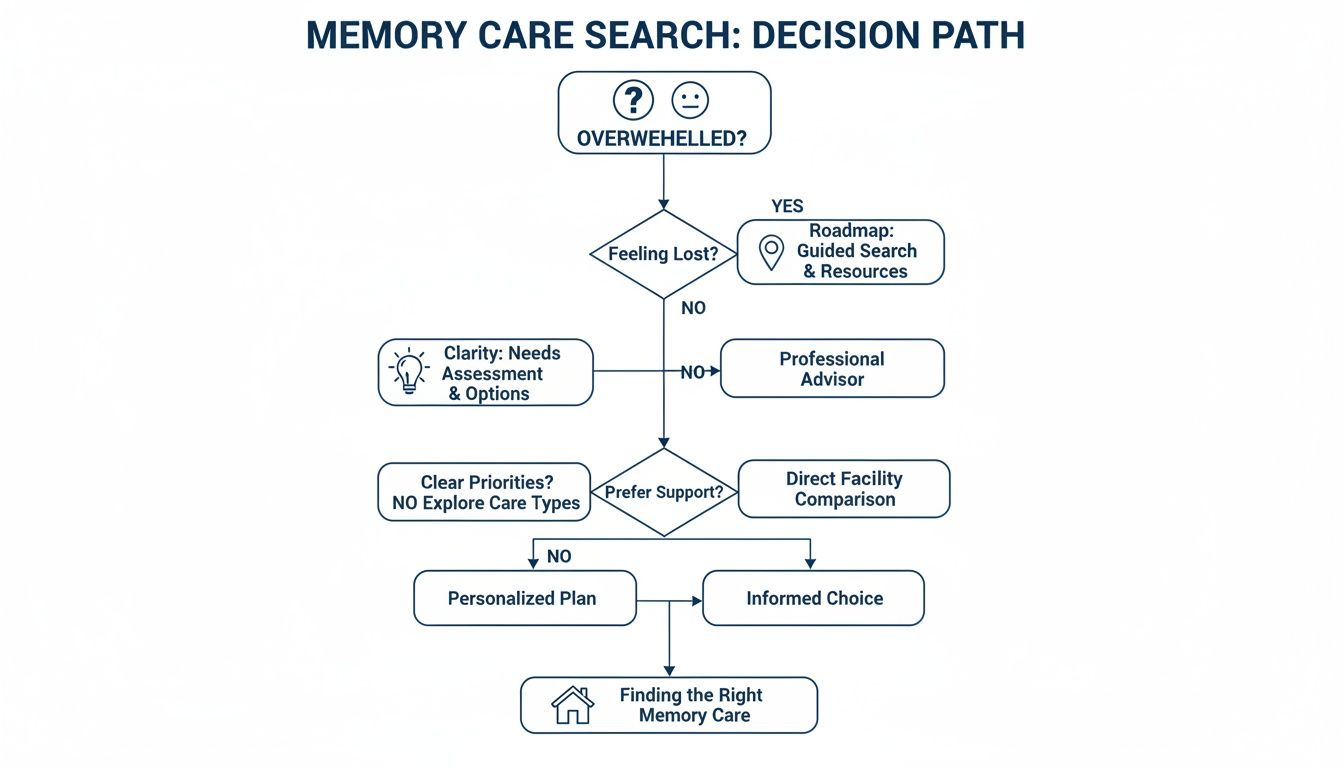
As you can see, having a roadmap is the key to moving from a state of confusion to one of confidence in your search.
Specialized Staff And Training
The single biggest difference is the people. In a memory care community, the entire team—from nurses and aides to the activity directors—gets specialized training in dementia care. They learn effective communication techniques for residents who may be non-verbal, strategies to de-escalate agitation, and how to gently redirect someone who is confused or anxious.
This isn’t just about being patient; it’s about understanding the clinical progression of the disease. While an assisted living aide is wonderful at helping with daily tasks, a memory care professional is trained to anticipate needs and spot the subtle changes that might signal a new health issue.
A Purpose-Built Environment
Memory care facilities are physically designed to reduce stress and boost safety for residents with cognitive impairments. Brochures might show pretty courtyards, but what you really need to look for are the specific, purpose-built features that make a genuine difference in daily life.
These environments are built with these needs in mind:
-
Secure Layouts: You'll often find circular hallways and secured exits that prevent wandering while still giving residents the freedom to walk safely. This is a world away from the long, potentially confusing corridors of a typical building.
-
Wander Gardens: These are enclosed, safe outdoor spaces where residents can get fresh air and enjoy nature without any risk of getting lost.
-
Visual Cues: Many top-tier communities use color-coded walls, memory boxes filled with personal trinkets outside resident rooms, and other visual aids. These simple tools help residents navigate their surroundings and easily identify their own personal space.
Insider Tip: The best memory care environments feel calm and intuitive. When you tour, pay attention to the atmosphere. Is it quiet and orderly, or does it feel loud and chaotic? The physical design directly impacts how anxious or at ease a resident feels.
Structured, Engaging Activities
While assisted living communities offer a wide menu of social events, memory care programming is much more structured and therapeutic. The goal here is meaningful engagement, not just entertainment.
With cognitive health being a top concern, research shows that 83% of future residents (self-reported) see mental fitness as essential to their well-being. This has pushed memory care communities to develop powerful programming centered on supporting cognitive function, such as music therapy, art projects, and sensory stimulation.
This specialized approach helps give residents a sense of purpose and accomplishment. Activities are often broken down into simple, manageable steps to ensure everyone can participate successfully, which helps reduce frustration and promote a positive, happy mood.
Assisted Living Vs Memory Care At A Glance
| Feature | Typical Assisted Living (RCF) | Specialized Memory Care |
| :--- | :--- | :--- |
| Staff Training | General care, first aid, medication assistance. | Specialized training in dementia, communication, and behavioral support. |
| Environment | Apartment-style living, standard building layout. | Secure, circular layouts, wander gardens, visual cues to reduce confusion. |
| Activities | Social calendars with diverse events like happy hours, outings, and clubs. | Structured, therapeutic activities designed to engage and calm (e.g., music, art, sensory). |
| Staffing Ratios | Lower staff-to-resident ratios. | Higher staff-to-resident ratios for increased supervision and personal attention. |
| Safety Measures | Emergency call systems. | Secured exits, 24/7 monitoring, and layouts designed to prevent wandering. |
Ultimately, choosing between these two options comes down to matching the level of support with your loved one’s specific cognitive and physical needs.
For a deeper dive into how these two types of care differ, you can check out our detailed comparison of memory care versus assisted living.
Decoding the True Cost of Memory Care in Northeast Ohio
<iframe width="100%" style="aspect-ratio: 16 / 9;" src="https://www.youtube.com/embed/iisIiRpEmjE" frameborder="0" allow="autoplay; encrypted-media" allowfullscreen></iframe>Let's talk about the one thing that brochures and websites never seem to make clear: the price. When you start searching for memory care facilities near me in Northeast Ohio, you won't find one simple, all-inclusive price tag. That’s because the monthly bill is actually two separate charges rolled into one.
Understanding this up front is the single best way to build a realistic budget and avoid frustrating surprises down the road. It's also the first step in figuring out which payment options might be available for your family.
Breaking Down Your Monthly Bill
Think of your monthly memory care bill like you would a utility bill—there’s a fixed service fee, and then there are charges based on actual usage. It works almost exactly the same way in a memory care community. The two core components you'll see are the Base Rent and the Level of Care fees.
-
Base Rent: This is your fixed monthly cost. It covers the apartment itself, three meals a day, all utilities, housekeeping and laundry services, and full access to the community's amenities and activities. Essentially, it's the "roof over your head" part of the bill.
-
Level of Care Fees: This is the part of the bill that can change. It's a separate monthly fee based on the amount of direct, hands-on help a resident needs. This fee is determined by a clinical assessment done by a nurse and can be adjusted over time as a person's needs evolve.
This structure means that two people living in identical apartments right next door to each other could have very different monthly bills. One person might just need gentle reminders, while their neighbor requires significant help with bathing, dressing, and getting around—which would result in a higher level of care fee.
Insider Tip: That "Level of Care" assessment is everything. Always ask for a copy of the assessment paperwork so you can see exactly how they score different needs. It's also wise to request that it be re-evaluated regularly to ensure you're only paying for the services your loved one is actually using.
Real Costs in the Cleveland Area
While national averages get thrown around a lot, they aren't very helpful for local families. Pricing and availability change daily, but we can give you a much clearer, more realistic starting point for your financial planning.
As of September 2024
Based on our local market data, the combined monthly cost for memory care in the Greater Cleveland area (including Cuyahoga, Lake, Lorain, and Medina counties) typically falls within this range:
- Combined Monthly Cost (Base Rent + Care): $6,500 - $9,500+
Keep in mind, this range can shift based on a community's specific location. A facility in a high-demand area near University Circle might have a different cost structure than one in a quieter part of Lorain County.
How Families Pay for Care in Ohio
Once you have a realistic cost estimate, the next big question is, "How are we going to pay for this?" In Ohio, most families use a combination of three main funding sources.
Private Pay
This is the most common path. Families use personal funds from savings, pensions, Social Security benefits, or the proceeds from the sale of a home. Paying privately gives you the widest selection of communities to choose from.
VA Aid & Attendance
This is a valuable, but often overlooked, benefit for wartime veterans and their surviving spouses. It provides a monthly pension that can be used to help cover the costs of long-term care. To qualify, you have to meet specific military service, medical need, and financial criteria.
Ohio Medicaid Assisted Living Waiver (AL Waiver)
For those who have run through their personal funds, this state-level program is an absolute lifeline. In Ohio, the Medicaid Assisted Living Waiver (AL Waiver) can help pay for the care services portion of the bill in an assisted living or memory care setting. The resident is typically responsible for their room and board, which they pay for with their own income (like Social Security).
But there's a crucial catch here that trips up many families.
Not all communities accept the AL Waiver.
We recently worked with a family from Parma who spent over a month touring communities on the West Side, only to find out their top choice didn't have any "Medicaid-pending" apartments available. This is where a local advisor becomes indispensable—we keep updated lists of which facilities participate in the program and, more importantly, whether they have current openings.
This is a complex topic that really benefits from careful planning. You can start by reading our guide on how to pay for memory care. Getting expert advice early on can save you from costly mistakes and make sure you've explored every single option available to you.
Your Essential Checklist For Touring Cleveland Facilities
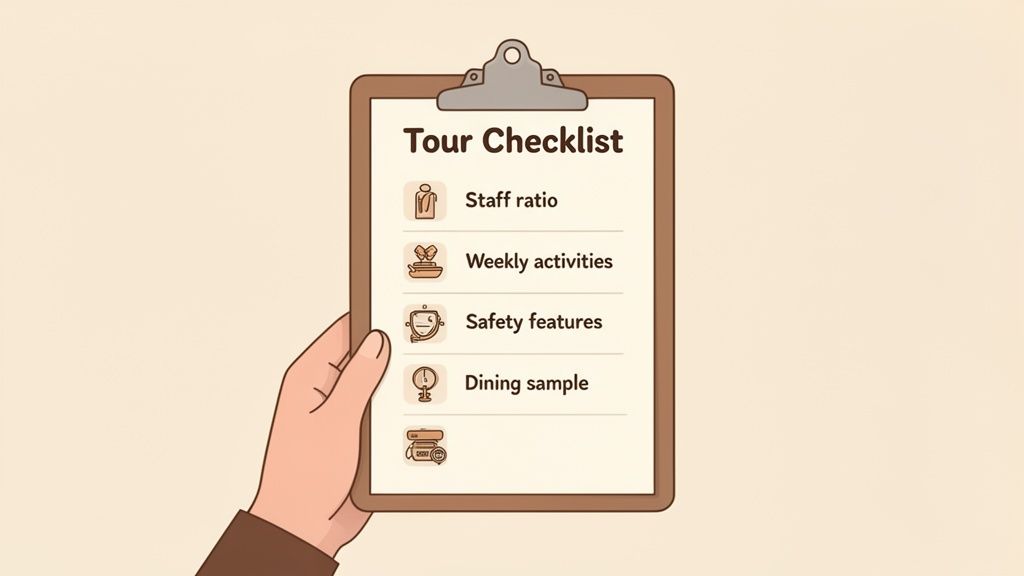
When you walk through the doors of a memory care facility for the first time, it’s easy to get sidetracked. The marketing director will point out the lovely dining rooms and beautiful, sunny courtyards. But your real job is to see past the polished presentation. You're not just a visitor; you're an investigator.
This checklist is designed to be your guide. It’ll help you ask the tough but necessary questions that tours sometimes skim over, giving you a genuine feel for what daily life is truly like for the people who live there. So instead of just asking if they offer activities, you'll be asking to see this week's specific memory care calendar.
Staffing And Training
The heart of any memory care community is its staff. Brochures will always talk about a "caring team," but you need to understand the specifics of their training and, just as importantly, how many of them are actually available to provide that care.
Questions to Ask:
-
What is the resident-to-staff ratio during the day, overnight, and on weekends? (Thin staffing, especially on weekends, can mean long waits for care.)
-
What specific dementia care training do your aides and nurses receive? How often is it updated?
-
Can you tell me about your staff turnover rate over the last year? (High turnover is a major red flag, as it disrupts routines and relationships.)
-
Is there a licensed nurse on duty, and what are their hours?
Physical Safety And Environment
A well-designed memory care unit should feel calm, intuitive, and, above all, secure. Pay attention to the small details—the environment should be built to support residents with memory loss, not add to their confusion.
Questions to Ask:
-
How does the community prevent residents from wandering? What happens if someone does manage to leave the building?
-
Are outdoor areas secured and easy for residents to access on their own?
-
Can you show me the safety features in the bathrooms, like grab bars and non-slip floors?
-
How are common areas monitored, especially during overnight hours?
The Dining Experience
Mealtimes are about so much more than just nutrition; they're a key time for social connection. A chaotic or rushed dining room can create a lot of anxiety and even cause residents to eat poorly.
Insider Tip: If you can, try to schedule your tour during a meal. Watch how the staff interacts with residents. Are they patiently helping those who need it, or does everything feel rushed? The vibe in the dining room speaks volumes about the community’s culture.
Questions to Ask:
-
How do you assist residents who have difficulty eating or swallowing?
-
Can you accommodate special dietary needs, like diabetic or low-sodium diets?
-
Are snacks and drinks available to residents 24/7?
-
What is the process if a resident prefers to eat in their room?
Resident Engagement And Daily Life
Meaningful activity is crucial for a person's quality of life. You're looking for more than just bingo on a generic calendar; you want to see programming that is therapeutic and thoughtfully designed for individuals with cognitive decline.
Things like music and art can create incredible moments of connection, even for residents who are non-verbal. It's all about finding that little spark of joy and familiarity in their day.
Questions to Ask:
-
May I see the specific memory care activity calendar for this week and next?
-
How do you encourage residents who are withdrawn to participate in activities?
-
What kind of specialized programming do you offer, like music therapy, art therapy, or sensory stimulation?
-
How are families involved and kept informed about their loved one's well-being?
By 2026, nearly one in five Americans will be aged 65 or older (state-sourced data), and the need for quality care is climbing fast. Finding the right fit is more important than ever.
This checklist is a fantastic starting point, but you can find even more in our guide on questions to ask during an assisted living tour. Remember, our advisors are here to help you schedule these tours and make sure you have all the information you need to make the best choice.
Comparing Local Options Across The Greater Cleveland Area
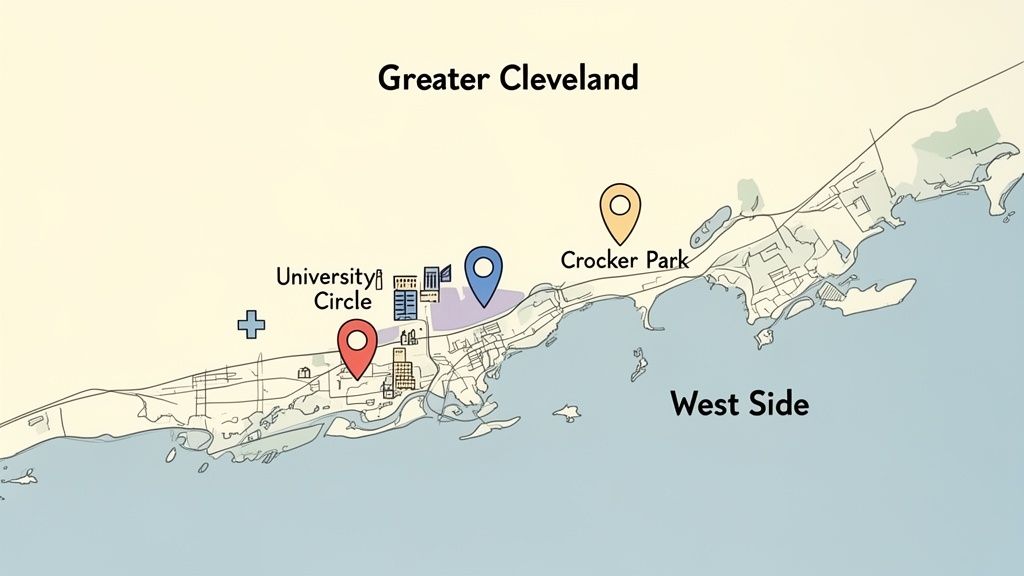
Location is so much more than just a pin on a map, especially when we're talking about a region as diverse as Greater Cleveland. When you start searching for "memory care facilities near me," you aren’t just looking for a building; you're looking for a community that feels right for your family. Understanding the unique character of our local neighborhoods is the key to finding that perfect fit.
The market for memory care is definitely growing. In fact, projections show it will reach USD 8.61 billion by 2030. This growth means more options are popping up across Northeast Ohio, but it also makes understanding the local differences even more critical. If you're interested in the numbers, you can learn more about these market trends from recent research.
East Side vs. West Side Nuances
The classic Cleveland debate absolutely extends to senior living. An East Side community in a place like Beachwood or Solon can have a completely different feel, pricing structure, and access to amenities compared to a West Side community in Westlake or Avon.
-
East Side: These communities are often closer to the cultural heart of University Circle and the main campuses of the Cleveland Clinic ("The Clinic") and University Hospitals ("UH"). This can be a huge advantage for families who need to manage frequent appointments with specialists.
-
West Side: Here, you might find communities closer to attractions like Crocker Park or those that offer a more relaxed, suburban vibe. The pricing and availability can be quite different from their East Side counterparts.
Ultimately, the decision often boils down to where the primary family caregiver lives. A short, easy drive for frequent visits is one of the most important things for staying connected and involved.
Proximity To World-Class Healthcare
Here in Cleveland, being near "The Clinic" or "UH" isn't just a nice perk; it’s a critical piece of the care puzzle. When a medical issue comes up, having a memory care community with established relationships with these major health systems can make a world of difference.
Insider Tip: When you tour, ask specifically how the community coordinates transportation and communication for specialist appointments. A seamless process can dramatically reduce stress. There's a huge difference between a facility that just hands you a list of transport services and one that actively helps schedule and manage the entire follow-up.
The Problem of Outdated Information
Here’s a hard truth you won't find in any glossy brochure: pricing and availability change daily. The rate you see online for a community in Westlake could be gone by tomorrow, and a perfect room in a Beachwood facility might open up without ever being advertised.
This is, hands down, the most frustrating part of searching on your own. You can spend days calling dozens of places, getting different answers from each one, only to find out all your hard-earned information is stale by the time you're ready to make a choice.
This is where having a local advisor becomes a game-changer. Our team at Guide for Seniors has the absolute latest information because we're in constant communication with these communities. We know who has openings, what their real-time rates are, and which places are truly a good fit for your specific situation. It shifts your search from exhausting and inefficient to focused and effective.
This article is for informational purposes and does not constitute medical or legal advice.
From Overwhelmed Researcher to Confident Guide
You’ve done your homework. You've learned the terminology, figured out the difference between memory care and assisted living, and now you’re at the hardest part: making the right choice for your family.
Searching for "memory care facilities near me" is often a frustrating and overwhelming process. It’s a world filled with confusing jargon, vague pricing, and the persistent worry that you might choose the wrong place. This is where most families get stuck.
It's easy to spend weeks, even months, calling one community after another, trying to compare amenities from slick brochures, only to realize the information is incomplete or already outdated. You end up right back where you started, feeling drained and more stressed than ever.
You don't have to navigate this alone. The best way to move forward is to turn all that research into focused action with the help of a local expert who knows the Cleveland senior living landscape inside and out.
From Endless Searching to Confident Decisions
Here’s a simple truth about senior living: pricing and availability can change in the blink of an eye. A room that was open yesterday might be gone today, and a new opening might not even be listed online yet. This is exactly why working with a Cleveland-based senior advisor—at no cost to you—makes all the difference.
Here’s what we bring to the table:
-
Honest, Unbiased Guidance: Our loyalty is to you, not a specific community. We focus entirely on finding the right fit for your loved one’s unique medical needs, your family's budget, and your preferred location.
-
Real, Up-to-Date Pricing: We get you the actual costs, breaking down the Base Rent and the different Levels of Care fees. No marketing spin, just the real numbers you need to plan effectively.
-
A Radically Simpler Process: Instead of you making dozens of calls, we do the heavy lifting. We’ll give you a short, hand-picked list of communities that genuinely match what you’re looking for, saving you an incredible amount of time and energy.
Why Waiting Can Hold You Back
A family from Medina recently shared their story with us. They felt completely paralyzed by all the choices online. After two months of "researching," they still hadn't scheduled a single tour because they didn’t know where to begin. After one 15-minute phone call with us, we pinpointed two fantastic local communities for them, and they toured both that very same week.
Your Personalized Roadmap is Ready
You deserve to make this decision with confidence, not by just taking a guess and hoping for the best. The next logical step is to get a clear, customized report showing today's real openings and costs. Don't let yourself stay stuck in the research loop.
A local Senior Advisor at Guide for Seniors can help you narrow the options, arrange personalized tours, and offer the support you need at every turn. Our help is always free for families.
Primary CTA: Pricing and availability change daily. Click here to get a current Rate Sheet for Cleveland-area communities.
Secondary CTA: Don't guess. Speak to a Cleveland-based Senior Advisor for free to narrow your list.
Answering Your Final Questions About Memory Care in Cleveland
As you get closer to making a decision, a whole new set of questions usually starts to surface. These are often the practical, "what-if" scenarios that can keep you up at night. Let's tackle them head-on so you can move forward with confidence.
How Quickly Can We Find a Good Placement?
This is probably one of the most common worries, especially when a sudden health crisis makes the move feel incredibly urgent. The honest answer is, the timeline really depends on how you handle the search.
-
Going it Alone: When families try to manage the search themselves, it often takes 4-8 weeks, sometimes longer. That time gets eaten up by finding communities online, calling around just to see who has an opening, scheduling tours, and then trying to make an apples-to-apples comparison of costs and services.
-
Working with a Local Advisor: By contrast, when you use a service like Guide for Seniors, most families find the right community and can even complete the move-in process in as little as 1-2 weeks. We cut out all the wasted time by giving you a short, pre-vetted list of places that we know match your specific needs and have current openings.
What Happens if My Parent's Needs Change Over Time?
This is such an important question to ask. The reality is that for someone with dementia, care needs will almost certainly increase. The good news is that memory care communities are built for exactly this reality.
When a resident starts needing more help—maybe with getting around or with personal hygiene—the community's nursing staff will do a new assessment. This usually leads to an adjustment in their "Level of Care" fee to cover the extra hands-on support. The whole point is to allow residents to "age in place" within the community for as long as possible, avoiding another disruptive move.
An Insider's Tip: During your tour, always ask about their specific process for handling significant medical changes. A quality community will have a clear, proactive plan for communicating with families and adjusting care. You're looking for a true partner in care, not just a landlord.
Are the Smaller, Residential Care Homes a Good Option?
You'll likely come across smaller, home-like memory care options, often called residential care homes. These places typically have fewer than 16 residents and can offer a very warm, family-style setting. For some people, they are an absolutely wonderful choice, but it’s important to understand the trade-offs.
| Feature | Larger Memory Care Community | Smaller Residential Care Home |
| :--- | :--- | :--- |
| Social Life | More people and a full calendar of structured group activities. | A quieter, more intimate setting that feels more like home. |
| Amenities | Often has extras like therapy gyms, movie rooms, and bistros. | Simpler amenities, focused on creating a comfortable home. |
| Staffing | A larger, more diverse team with nurses, activity directors, and aides. | A smaller, tight-knit team of caregivers who you'll see every day. |
| Oversight | Governed by specific state regulations with frequent ODH inspections. | Also licensed and inspected, but may have slightly different staffing rules. |
The "best" choice really comes down to your loved one's personality. Would they thrive with more activity, or would they feel more secure in a quieter home? An advisor can help you explore both types of local facilities.
How Do I Make Sense of State Inspection Reports?
The Ohio Department of Health (ODH) performs regular, unannounced inspections of every licensed facility. While you can look these reports up online, they can be pretty confusing to read. It's crucial to know that not all "citations" are created equal.
An inspector might write up a facility for something minor, like a torn window screen, or for something far more serious related to patient care. The key is to look at the context and severity of the issue. A great sign of a well-run community is a director who is willing to openly discuss a citation you find on their report. Transparency is everything. Our local advisors review these reports regularly and can help you understand what the findings actually mean for your loved one's safety.
You've done the research and learned what to look for. The final step is to turn all that knowledge into confident action. Guide for Seniors is here to give you a simple, stress-free path forward. A local advisor can give you up-to-date pricing, confirm which communities have openings that fit your needs, and even schedule the tours for you.
-
Primary CTA: Pricing and availability change daily. Click here to get a current Rate Sheet for Cleveland-area communities.
-
Secondary CTA: Don't go it alone. Speak to a Cleveland-based Senior Advisor for free to narrow your list.
Need Help Finding Senior Living?
Our local advisors compare pricing, schedule tours, and answer your questions — completely free.