A Guide to Home Modifications for Seniors in Cleveland
For families across Greater Cleveland, helping an aging parent stay safe and comfortable at home is a top priority. But deciding between adapting the family home and considering senior living options like assisted living can feel overwhelming. This guide offers a calm, clear look at making the right choice for your family.
-
TL;DR
-
The most critical home modification is making the bathroom safer with grab bars, non-slip surfaces, and better lighting.
-
In Ohio, Medicaid waiver programs like PASSPORT and VA benefits can help cover the costs of necessary home modifications.
-
Hiring a Certified Aging-in-Place Specialist (CAPS) ensures the work is done correctly and safely.
-
If falls become frequent, medical needs grow complex, or social isolation sets in, it may be time to consider assisted living.
Who this helps
This guide is for families in Cuyahoga, Lake, Lorain, Geauga, Medina, and Summit counties who are trying to decide if modifying a parent's home is the best long-term solution, or if it's time to explore assisted living.
Key takeaways
-
Start with a safety audit: A room-by-room walkthrough is the best way to identify immediate risks like tripping hazards and poor lighting.
-
Focus on high-impact, low-cost fixes first: Simple changes like adding night lights, securing rugs, and improving access to everyday items can make a big difference.
-
Know when to call a pro: For structural changes like ramps or walk-in showers, a qualified contractor with experience in senior safety is essential.
-
Understand the limits: Home modifications can’t replace the 24/7 care and social engagement offered by an assisted living community.
Is Staying Home the Right Choice?
Figuring out whether to adapt the family home or move to a senior living community is one of the most important discussions you'll have. Most seniors want to stay in the home they know and love. But for their families, the top concern is safety.
This isn’t just an emotional choice. It’s a practical one that depends on safety, ongoing costs, and the level of care your loved one needs now—and in the future. A few grab bars might work today, but what is the plan if mobility declines or memory issues appear?
This decision tree lays out the two primary paths families explore when planning for a senior’s long-term living arrangement.
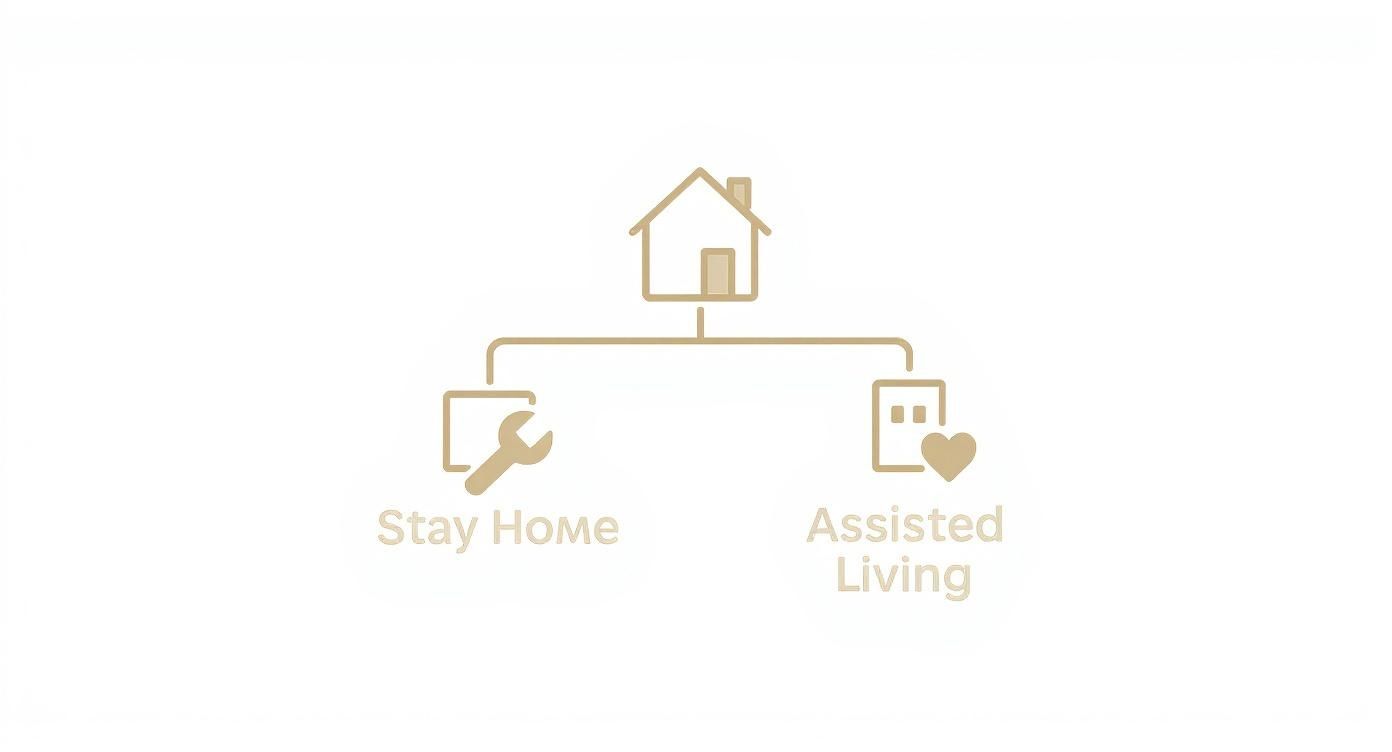
As the graphic shows, the right answer is deeply personal and depends entirely on an individual’s health, mobility, and social needs.
Home Modifications vs. Assisted Living: A Quick Comparison
To help Greater Cleveland families see the differences, here’s a high-level comparison of modifying a home versus moving into an Assisted Living (Residential Care Facility), which is what these communities are licensed as in Ohio.
| Factor | Home Modifications (Aging in Place) | Assisted Living |
| :--- | :--- | :--- |
| Living Environment | Remain in a familiar home and neighborhood. | Move to a new, structured community with peers. |
| Cost Structure | Upfront renovation costs, plus ongoing home maintenance, utilities, and in-home care fees. | Monthly fee covering rent, meals, care, and activities. May include level-of-care fees, which are extra charges based on the amount of daily help a resident needs. |
| Social Interaction | Social life depends on existing networks and family visits. | Built-in social calendar, dining, and daily activities with other residents. |
| Care & Support | Care is brought into the home (e.g., home health aides). | 24/7 on-site staff for personal care, medication management, and emergencies. |
| Home Maintenance | The senior or their family is responsible for all upkeep and repairs. | Maintenance-free living; all repairs and upkeep are handled by the facility. |
What this means for you: There is no single "best" answer. The right decision for your family in Cuyahoga County might be different from a family's choice in Lorain or Geauga. The key is to honestly assess your loved one's current and future needs against the realities of what each environment can provide.
Starting these conversations can be tough. If you need some guidance, you might find useful tips on how to talk to parents about assisted living. This is about finding the solution that provides the best quality of life, whether that’s in an adapted home or a supportive community.
A Practical Room-by-Room Home Safety Checklist
The best way to spot safety issues is to walk through your loved one's home with fresh eyes. This checklist breaks down practical home modifications for seniors room by room, starting with the spaces that pose the biggest risks.
The Bathroom: Your Highest Priority
More accidents happen in the bathroom than anywhere else in the house due to water, slippery surfaces, and the need to balance. This is where you need to start.
-
Install Grab Bars: Place them inside the shower, next to the toilet, and anywhere else a person might need to steady themselves. These must be anchored into wall studs to support a person's full weight.
-
Improve Surfaces: Add non-slip mats inside the tub or shower and a quality bath mat with a rubber backing on the floor.
-
Upgrade the Toilet: A raised toilet seat with handles can make getting up and down much easier for someone with stiff knees or hips.
-
Consider a Walk-In Shower: Removing the high tub wall is one of the most effective ways to prevent a fall. A shower bench and handheld showerhead also improve safety.
-
Add Lighting: A bright, motion-activated night light prevents fumbling for a switch during late-night bathroom trips.
What this means for you: Making the bathroom safer is the most important first step. Even just a few well-placed grab bars can dramatically lower the risk of injury and give your parent a huge boost in confidence.
The Kitchen: Improving Safety and Access
The kitchen can be full of challenges, from reaching high shelves to handling hot items. Your goal is to make daily tasks easier and safer.
Start by moving frequently used items—plates, glasses, coffee mugs—from high cabinets to lower, easy-to-reach shelves. Replace small cabinet knobs and faucet handles with larger, lever-style ones that are easier for arthritic hands to grip. Good lighting is also critical; add under-cabinet LED strip lighting to illuminate countertops for safer food prep. To reduce the risk of slips, looking into non-slip vinyl flooring options is a smart upgrade.
Entrances and Hallways: Clearing the Path
Getting in and out of the house safely is fundamental, especially with a cane or walker. The mission here is to remove all tripping hazards.
-
Remove throw rugs and runners that can slide or bunch up.
-
Secure or hide electrical cords that cross walkways.
-
Clear away piles of mail, shoes, or other clutter.
Make sure hallways and the path to the front door are well-lit. For homes in Northeast Ohio, keeping walkways clear of ice and snow is critical. Our guide to Cleveland winter safety tips for seniors has specific local advice. If there are steps to the front door, a sturdy ramp with handrails is often the best long-term solution.
Living Room and Bedroom: Creating Comfortable, Safe Spaces
Arrange furniture to create wide, clear walkways. Secure area rugs with double-sided tape or remove them entirely. Tuck all electrical and phone cords behind furniture. In the bedroom, place a lamp within arm's reach of the bed. Ensure the bed is at a height where your loved one can sit on the edge with their feet flat on the floor.
Disclaimer: This article is for informational purposes only and does not constitute legal, financial, or medical advice. Please consult with licensed professionals for guidance on your specific situation.
How to Fund Home Modifications in Ohio
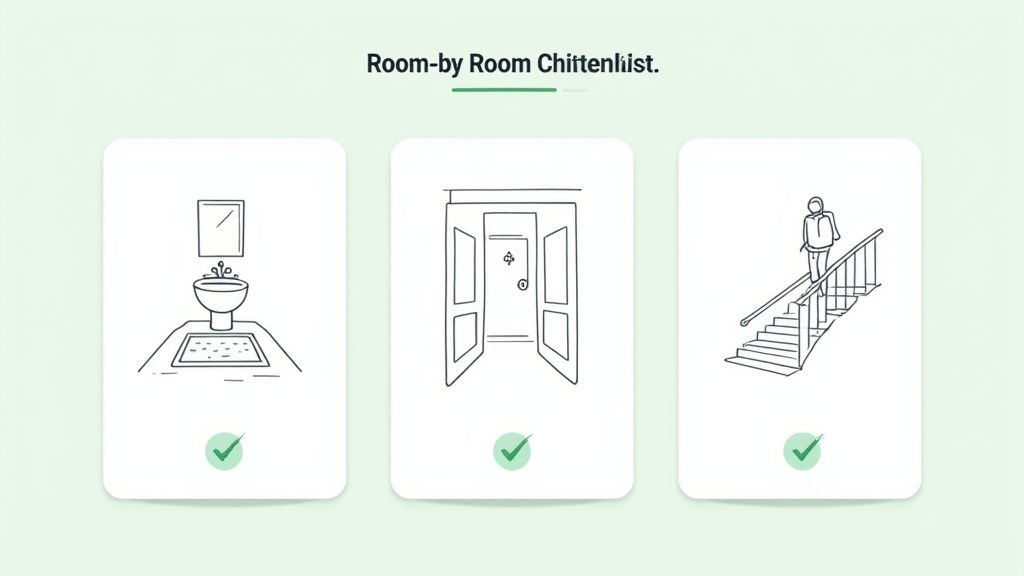
Once you've identified the needed safety upgrades, the next question is how to pay for them. Costs for home modifications for seniors can range from a few hundred dollars for grab bars to tens of thousands for a bathroom remodel.
Fortunately, several Ohio-specific programs can help reduce the financial burden.
Ohio Medicaid Waiver Programs
For seniors who meet financial and medical criteria, Ohio’s Medicaid waiver programs are designed to help people who would otherwise need nursing home care to stay in their homes. In Ohio, your first call should be to your local Area Agency on Aging (AAA). For Cuyahoga, Geauga, Lake, Lorain, and Medina counties, that’s the Western Reserve Area Agency on Aging (WRAAA). They are the gateway to these programs.
- PASSPORT Waiver: This is Ohio's main program for helping older adults get care at home. PASSPORT funds can often cover minor home modifications and equipment like ramps, grab bars, or a stairlift.
Example: Cuyahoga County family using the AL Waiver…
A family in a two-story Parma home was worried about their father, a retired steelworker. His knee replacement made climbing stairs a daily struggle. After connecting with the WRAAA, they learned he was eligible for the PASSPORT waiver. The program helped pay for a new stairlift, allowing him to safely access his bedroom and stay in the home he has owned for 40 years.
VA Benefits for Veterans
If your loved one served in the military, the U.S. Department of Veterans Affairs (VA) offers grants to help veterans with service-connected disabilities live more independently.
The main program is the Home Improvements and Structural Alterations (HISA) grant. A HISA grant covers medically necessary improvements like building ramps, widening doorways, or installing roll-in showers. To learn more, contact your local VA medical center.
Ohio Funding Options for Home Modifications
This table breaks down key resources available to seniors in our area.
| Program Name | What It May Cover | Who to Contact in Northeast Ohio |
| :--- | :--- | :--- |
| PASSPORT Waiver | Ramps, grab bars, stairlifts, minor bathroom modifications. | Western Reserve Area Agency on Aging (WRAAA) |
| HISA Grant (VA) | Medically necessary changes for veterans like roll-in showers and ramps. | Your local VA Medical Center |
| Long-Term Care Insurance | Varies by policy; may cover modifications to prevent a move to a facility. | Your insurance provider |
| Local Community Grants | Small grants or volunteer labor for minor repairs and safety installations. | WRAAA or your local Senior Center |
These programs exist because in Ohio, the state government understands the importance of helping seniors stay in their homes safely. When planning for larger projects, getting a handle on costs is crucial. For instance, you might want to research new garage door costs in Northeast Ohio if an automatic opener is on your list.
Finding the Right Contractor in the Cleveland Area
Once you’ve planned the needed home modifications for seniors, you need to find the right person for the job. This requires a professional who understands the safety and accessibility challenges of aging.
Look for Specialized Expertise
The gold standard is the Certified Aging-in-Place Specialist (CAPS) designation. A CAPS professional has completed training through the National Association of Home Builders (NAHB) focused on senior-specific home design. They know the technical details that matter, like the correct height for a grab bar or the proper gradient for a wheelchair ramp.
Your Contractor Vetting Checklist
Before signing a contract in Cuyahoga, Lake, or a surrounding county, ensure you can check every box on this list.
-
Licensed and Insured? Ask for their Ohio contractor’s license and proof of liability insurance. This is non-negotiable.
-
Local References? Ask for recent clients in Northeast Ohio who had similar accessibility work done.
-
A Relevant Portfolio? Ask to see photos of grab bars, ramps, or walk-in showers they’ve installed.
-
Familiar with Local Codes? A contractor in Beachwood needs to know the permit process there, which may differ from Westlake.
-
A Clear, Itemized Quote? You should receive a detailed proposal breaking down all labor and material costs.
What this means for you: A contractor’s transparency reflects their professionalism. If they provide this information without hesitation, you're on the right track. Don't let anyone rush you through this process.
Getting Quotes and Reviewing Contracts
Always get at least three quotes to understand the fair market rate. When you receive a contract, read every word. It should detail the scope of work, a payment schedule, the specific materials to be used, and a warranty. If anything is unclear, ask for clarification in writing. A solid contract protects everyone.
When Home Modifications May Not Be Enough
The goal of home modifications for seniors is to create a safe environment. But there may come a time when even the best modifications can't provide the level of care a loved one needs. Realizing this isn't giving up—it's adapting the plan to ensure their safety.
Key Signs to Watch For
It’s rarely a single incident, but rather a pattern of small events that signal a change is needed.
-
Increasing Falls: One fall is a warning. Frequent falls, even with grab bars, suggest 24/7 supervision may be necessary.
-
Complex Medical Needs: When care moves beyond a pill organizer to wound care, injections, or managing multiple chronic illnesses, on-site nursing support becomes critical.
-
Significant Memory Loss: For a loved one with dementia, safety concerns like wandering or leaving the stove on indicate a secure, supervised setting is needed.
-
Deep Social Isolation: A safe house can become a lonely place. If an older adult can't leave home or see friends, their mental and emotional health will suffer.
-
Caregiver Burnout: When a family caregiver becomes physically and emotionally exhausted, the situation is unsustainable. Their well-being matters, too.
What this means for you: Recognizing these signs is not a failure—it is an act of profound care. It means you are adapting the plan to meet your loved one's evolving needs and prioritizing their health and safety above all else.
Understanding Your Options in Ohio
When staying home is no longer the safest path, it helps to understand the senior living landscape.
-
Assisted Living (Residential Care Facility): In Ohio, an Assisted Living (Residential Care Facility) is state-licensed to offer personal care (help with bathing, dressing, medications) in a home-like, social setting. It is ideal for those who need daily support but not intensive, 24/7 medical treatment.
-
Skilled Nursing Facility (SNF): A Skilled Nursing Facility (often called a nursing home) is a clinical setting regulated by both the state and the federal Centers for Medicare & Medicaid Services (CMS). This is for someone who needs round-the-clock medical care from licensed nurses.
| Feature | Assisted Living (Residential Care Facility) | Skilled Nursing Facility (SNF) |
| :--- | :--- | :--- |
| Primary Purpose | Support with daily living and social engagement. | 24/7 medical care and rehabilitation. |
| Environment | Social, residential, with private apartments. | Clinical, hospital-like setting. |
| Ideal For | Seniors needing help with personal care and meds. | Individuals with complex, chronic medical conditions. |
| Ohio Regulation | Ohio Department of Health (ODH) | ODH & CMS (Federal) |
This is one of the hardest decisions a family can make, but you don't have to navigate it alone.
What to do next
-
Use the Bathroom Safety Checklist: Walk through your loved one's bathroom this week and identify the top 2-3 changes you can make immediately.
-
Contact the Western Reserve Area Agency on Aging (WRAAA): Call them to ask about eligibility for the PASSPORT waiver program to help fund modifications.
-
Find a CAPS-Certified Contractor: Use the National Association of Home Builders directory to find a certified specialist in your area for a consultation.
-
Talk to a Local Senior Living Advisor: If you're seeing signs that home modifications may not be enough, a conversation with a local expert can help clarify your options.
Frequently Asked Questions (FAQ)
What modifications are most critical for preventing falls?
Start with the bathroom. The three most critical modifications are: properly installed grab bars in the shower and next to the toilet; non-slip mats inside the tub and on the floor; and better lighting, especially a motion-activated night light.
Can small, inexpensive changes really make a difference?
Absolutely. Swapping round doorknobs for lever-style handles can be a huge help for someone with arthritis. Moving everyday dishes to a lower shelf eliminates the risk of using a step stool. These small adjustments reduce daily frustrations and improve safety.
What exactly is a Certified Aging-in-Place Specialist (CAPS)?
A Certified Aging-in-Place Specialist (CAPS) is a professional trained by the National Association of Home Builders specifically on the design and construction needs of older adults. Hiring a CAPS-certified contractor in the Cleveland area ensures that modifications are done correctly to enhance safety and independence.
At Guide for Seniors, we help Cleveland-area families work through these important decisions every day. If you're trying to figure out if assisted living or memory care is the better path forward, our local advisors offer free, personalized guidance. Let us help you find the safest, most supportive solution for your family. Get started with a free consultation today.
Find Medicaid-Approved Communities Near You
Looking for a facility that accepts the Ohio Medicaid Assisted Living Waiver? Browse communities in these Cleveland suburbs:
Medicaid waiver communities on Cleveland's west side
East side communities accepting Ohio Medicaid
Affordable Medicaid options in south suburbs
Near-west Medicaid-approved communities
Southwest suburban Medicaid facilities
Central location with waiver-approved care
Need help navigating Medicaid? Our local advisors provide free guidance →
Need Help Finding Senior Living in Greater Cleveland?
Our Greater Cleveland local advisors compare pricing, schedule tours, and answer your questions — completely free.