A Cleveland Family's Guide to Senior Living Costs
- TL;DR: Key Cost Facts for Cleveland Families
-
Assisted living costs vary by location and care needs. In Greater Cleveland, expect a monthly range of $4,500 to $7,500, which includes a base rate for room and meals plus separate fees for personal care.
-
Understand the bill. Your monthly statement will have a base rate (like rent) and level-of-care fees (for hands-on help). A one-time community fee is also common at move-in.
-
Medicare does not pay for assisted living. It only covers short-term, doctor-ordered skilled nursing care after a qualifying hospital stay.
-
Ohio's AL Waiver can help. For those who qualify financially and medically, the Medicaid Assisted Living Waiver (AL Waiver) helps pay for the care services portion of the bill, not room and board.
Who This Helps
This guide is for families in Cuyahoga, Lake, Lorain, Geauga, Medina, and Summit counties who are trying to understand the real costs of senior living. If you are feeling stressed and short on time, this guide provides clear, local information to help you plan.
Key Takeaways
-
Location matters: A community in Beachwood will likely have a different base rate than one in Lorain.
-
Care needs drive the price: The more hands-on support required, the higher the monthly "level-of-care" fee.
-
Ask specific questions: Use our checklist on your tours to get a complete financial picture and avoid surprises.
Breaking Down the Bill: What's Really Included in Senior Living Prices?
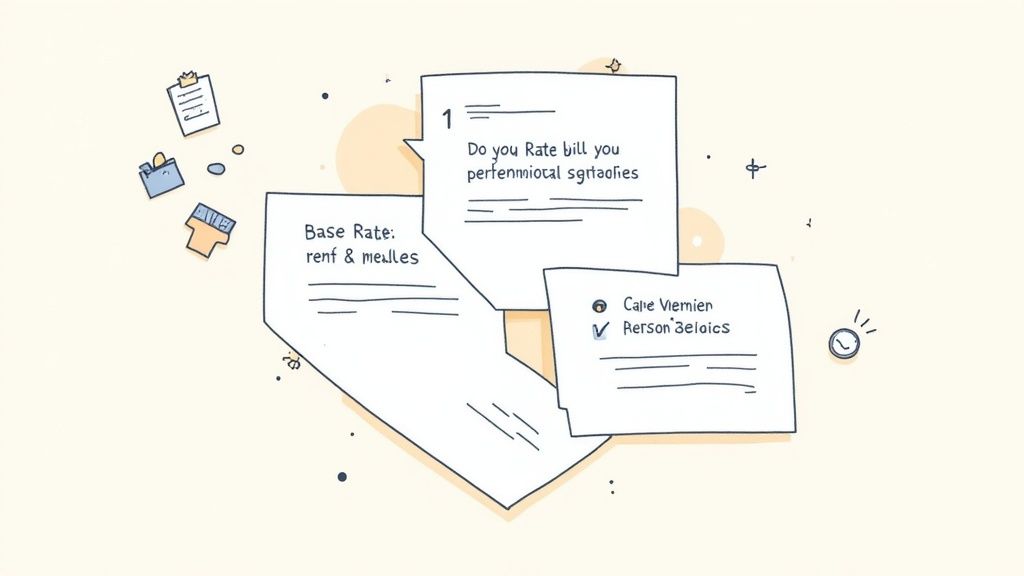
When you look at a price sheet from a senior living community, it’s not just a single number. To budget accurately, you need to know how the bill is structured. Most communities in the Cleveland area break down their pricing into three main parts.
The Three Core Components of Senior Living Costs
Understanding these components is the key to comparing different communities fairly.
| Fee Type | What It Covers | When You Pay It |
| :--- | :--- | :--- |
| Base Rate | The apartment, three meals a day, utilities, housekeeping, and access to community amenities (e.g., library, social events). | Monthly |
| Level-of-Care Fees | Hands-on help with personal tasks like bathing, dressing, and medication management. The amount is based on a personal care assessment. | Monthly |
| One-Time Community Fee | An administrative fee for apartment preparation and processing move-in paperwork. It is typically non-refundable. | Once, before move-in |
This structure means someone who is mostly independent will pay less each month than a resident who needs significant daily help, even if they live in identical apartments. For a deeper look, learn more about what is included in assisted living costs in our detailed guide.
How Communities Determine Care Fees
The "level-of-care" fee is the part of the bill that can change over time. Before move-in, a nurse will conduct a health assessment to determine the resident's needs. This evaluation looks at how much help is needed with Activities of Daily Living (ADLs)—the basic tasks of self-care like bathing, dressing, and getting around. Based on this assessment, a care level is assigned, each with a specific monthly fee.
What this means for you: Always ask how and when your loved one's care plan will be reassessed. A change in health, such as after a fall or hospitalization, can lead to a change in their care level and a higher monthly bill. In Ohio, communities typically review care plans quarterly, annually, or when a resident's condition changes.
Checklist: Key Pricing Questions for Your Tour
Use this checklist to get a complete financial picture during your visit.
Your Tour Pricing Checklist
-
Can I see a complete list of all fees, including the base rate and all care level charges?
-
How is the initial care level determined, and who performs the assessment?
-
How often are residents reassessed? What would trigger an unscheduled reassessment?
-
Are there extra costs for services like transportation to doctor's appointments, salon services, or incontinence supplies?
-
What has the average annual rate increase been for the past three years?
-
Is the one-time community fee ever negotiable?
Assisted Living Costs in the Cleveland Area
https://www.youtube.com/embed/L3OJqWZcXFU
The monthly cost of assisted living in Northeast Ohio is shaped by a few key factors. A community in a quiet Geauga County suburb will likely have a different price than one in Westlake. Understanding these variables is the first step to comparing your options accurately.
Nationally, senior living costs are rising due to high demand, according to national senior housing trends. For Cleveland-area families, the price typically comes down to three things: location, apartment size, and amenities.
What Drives Price Differences Across Cleveland
The same factors that influence local real estate prices also affect senior living costs.
-
Community Location: A facility in a neighborhood like Beachwood or Rocky River will likely have a higher base rate than a similar community in Medina or Lorain County.
-
Apartment Size: A large one-bedroom or a suite with a kitchenette will cost more than a studio apartment.
-
Amenities: Luxury features like an indoor pool, a full-service salon, or a private movie theater increase a community's operating costs, which is reflected in the monthly fees.
What this means for you: When comparing prices, make sure you're comparing apples to apples. A lower price might mean a smaller living space or fewer included services. Understand exactly what you are getting for your money.
Ohio’s Medicaid Assisted Living Waiver
For many Ohio families, the Medicaid Assisted Living Waiver (AL Waiver) makes quality care more affordable. This program helps pay for the care services an eligible senior receives in an Assisted Living (Residential Care Facility).
Crucially, the AL Waiver does not cover room and board. The resident is still responsible for the cost of their apartment and meals, which is typically paid for using their Social Security or other income. The program's goal is to help eligible seniors get the support they need in a home-like setting instead of a more costly nursing home.
Who Qualifies for the AL Waiver in Ohio
To be eligible, an individual must meet both medical and financial requirements set by the state.
AL Waiver Eligibility Checklist (As of March 2025)
-
Age: At least 60 years old.
-
Financial Need: Income and assets must be within the limits set by Ohio Medicaid for long-term care.
-
Medical Need: An assessment must confirm a need for an "intermediate level of care," meaning the person requires hands-on help that would otherwise qualify them for a nursing home.
-
Willingness: Must agree to receive care in an approved assisted living community that accepts the waiver.
Example: A Cuyahoga County family using the AL Waiver
A woman in Parma needs daily help with dressing, taking her medications, and bathing. Her only income is from Social Security, and she has minimal savings. The family contacts the Western Reserve Area Agency on Aging. An assessor confirms she meets the medical need, and her finances are within Ohio's limits. She is approved for the AL Waiver. She moves into a local assisted living community, using her Social Security to pay for her room and board, while the waiver pays the community directly for her personal care services.
Sorting Through Costs for Memory Care and Skilled Nursing
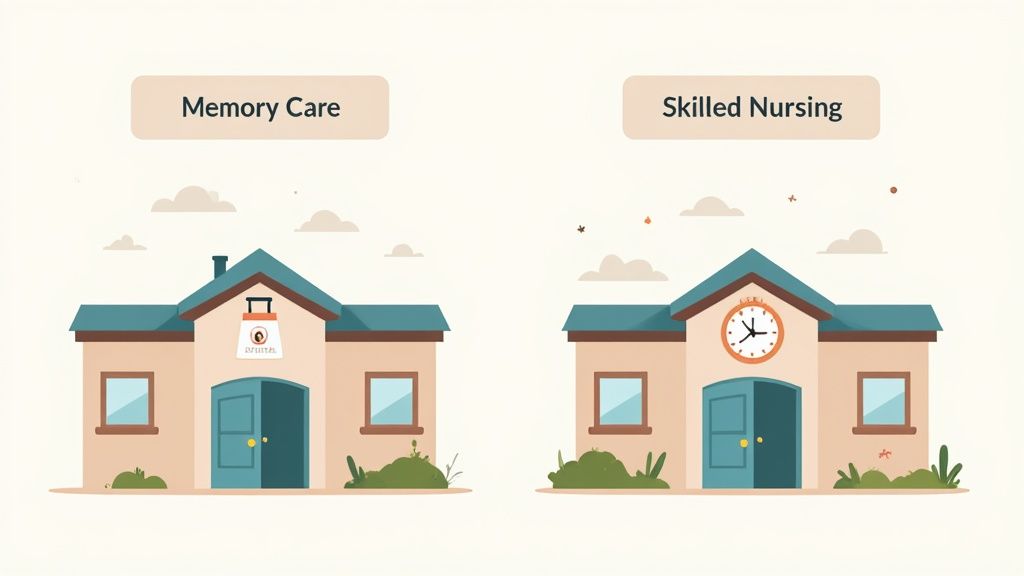
When a loved one needs more advanced support due to dementia or a significant medical condition, it is vital to distinguish between memory care and skilled nursing. Their costs, services, and payment methods are very different.
In Ohio, assisted living facilities (including memory care) are state-licensed as Residential Care Facilities. They provide personal care and supervision. Skilled Nursing Facilities (SNFs), in contrast, are federally regulated by CMS and provide 24/7 medical care from licensed nurses.
Why Memory Care Costs More
The higher price for memory care is due to the intensive, specialized support residents require.
-
Specialized Staff Training: Caregivers are trained in dementia care to manage challenging behaviors and engage residents in calming, structured activities.
-
Secure Environments: Communities are designed with secured exits and enclosed outdoor spaces to prevent wandering, a common risk for those with memory loss.
-
Tailored Programming: Daily schedules are predictable and include activities like music therapy and sensory engagement to support cognitive function and reduce agitation.
What this means for you: When you search for the "cost of senior living near me" for a parent with dementia, the extra expense for memory care covers essential safety features and specialized expertise. Find more details in our guide on how much memory care costs.
Understanding Skilled Nursing Costs and Coverage
SNFs provide medical care you can't get in assisted living. Because of this, funding sources like Medicare and Ohio Medicaid play a much larger role.
How Medicare Covers Skilled Nursing
Let’s be clear: Medicare does not pay for long-term custodial care. It is designed for short-term, rehabilitative care in a skilled nursing facility after a qualifying hospital stay. To be eligible, a person must have been admitted as a hospital inpatient for at least three consecutive days and have a doctor's order for daily skilled care. If these strict criteria are met, Medicare may cover up to 100 days, with a significant daily copay required after day 20.
How Ohio Medicaid Covers Skilled Nursing
For long-term care needs, many Ohio families rely on Medicaid. Unlike the AL Waiver, Medicaid can cover the full cost of a long-term stay in a nursing home for those who meet the strict financial and medical eligibility requirements. To apply, families typically work with their county's Department of Job and Family Services.
Using Your Own Benefits to Pay for Senior Care
Beyond government programs, many families can use private resources like Long-Term Care insurance or VA benefits.
Putting a Long-Term Care Insurance Policy to Work
If your loved one has a long-term care (LTC) insurance policy, now is the time to review it. These policies are designed to pay for services like assisted living, but you must formally activate the benefits. This process usually involves notifying the insurer, providing medical proof of need, and satisfying an "elimination period"—a waiting period of 30 to 90 days where you pay out-of-pocket before the policy begins to pay.
Steps to Activate an LTC Policy:
-
Notify the Insurer: Call to start a claim.
-
Provide Medical Proof: Submit documentation from a doctor confirming care is needed.
-
Satisfy the Elimination Period: Pay for care out-of-pocket for the required waiting period (e.g., 90 days).
-
Receive Benefits: The insurer will begin paying the community or reimbursing you up to the daily benefit limit.
Using VA Benefits for Senior Living
Veterans and their surviving spouses may be eligible for a pension benefit called Aid & Attendance. This is an additional monthly payment for those who need help with daily activities and can be used to pay for assisted living.
In Ohio, the VA requires that the veteran served at least 90 days of active duty (with one day during a wartime period) and meets specific medical and financial need criteria. To apply, gather military records (like the DD-214), financial statements, and medical evidence. Your local county Veterans Service Office can provide guidance. This is not just a local issue; the demand for senior housing is growing, as detailed in this in-depth KPMG report on the senior living landscape. For more on state programs, see our guide to the Ohio Medicaid Assisted Living Waiver.
Turning Research Into Action: Your Next Steps
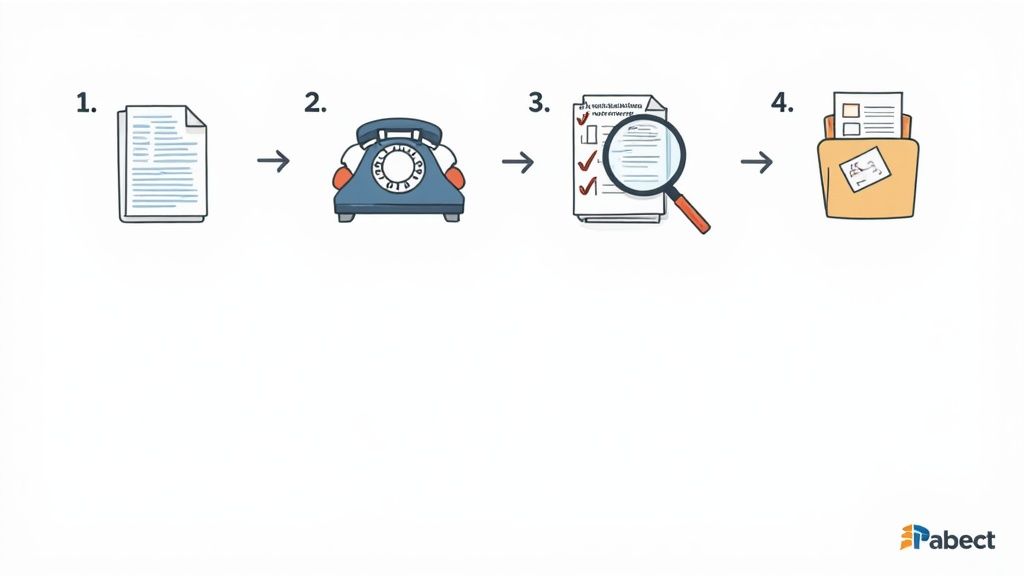
You now have the information. Here is a simple plan to move forward.
What to Do Next
-
Map Out Your Finances. Create a clear budget by listing all monthly income (Social Security, pensions) and available assets. Compare this to the monthly cost ranges in your area to narrow your search.
-
Contact Your Area Agency on Aging. If the AL Waiver seems like a potential fit, your next call should be to the agency serving your county. For Cuyahoga, Lake, Geauga, Lorain, and Medina counties, that is the Western Reserve Area Agency on Aging. Ask to begin the screening process.
-
Schedule Two or Three Tours. With a budget in mind, visit a few communities. Use your pricing checklist, but also observe the environment. Is it clean? Are residents engaged? How do staff members interact with them?
-
Check Inspection Reports. Before you visit, use the Ohio Long-Term Care Consumer Guide to look up a facility's latest state inspection report. This allows you to ask informed questions about their safety and care history. Note which authority (Ohio Department of Health for assisted living, CMS for skilled nursing) conducted the inspection and the date.
High demand means it pays to be prepared. Investor interest has pushed occupancy rates higher, according to the latest senior housing investor survey from CBRE.
Your Document Gathering Checklist
Having these documents ready will make the application process smoother.
-
Power of Attorney documents (for healthcare and finances)
-
Social Security and Medicare/Medicaid cards
-
Proof of all income sources (e.g., Social Security benefit letter)
-
Recent statements for all assets (bank accounts, investments)
-
Long-Term Care insurance policy (if applicable)
-
Veteran’s discharge papers (DD-214), if applicable
Disclaimer: This article is for informational purposes only and does not constitute legal, financial, or medical advice. Please consult with a licensed professional for personalized guidance.
FAQ: Your Top Questions About Senior Living Costs
How much should I expect to pay for assisted living in Cuyahoga County?
In Cuyahoga County, a realistic monthly budget for assisted living generally falls between $4,500 and $7,500 (as of March 2025). This total cost is made up of a base rate (for the apartment, meals, and utilities) and separate level-of-care fees for any hands-on assistance needed. The only way to get an exact price is to have a community complete a personal care assessment.
Will Medicare cover assisted living costs in Ohio?
No. In Ohio, Medicare does not pay for long-term assisted living. It will not cover the monthly bill for room, board, or personal care services. Medicare is health insurance for short-term medical needs, such as a limited rehabilitation stay in a skilled nursing facility after a qualifying hospital stay.
What’s the difference between a community fee and a monthly care fee?
A community fee is a one-time, upfront charge paid before move-in. It covers administrative and apartment preparation costs and is usually non-refundable. A monthly care fee is an ongoing, recurring charge on your bill that pays for the hands-on assistance your loved one receives from staff. Your first bill will be higher because it includes the one-time community fee.
Navigating the costs and options for senior living in Cleveland shouldn't feel like a solo mission. The local advisors at Guide for Seniors are here to help you make sense of the numbers, find communities that fit your family's budget, and arrange tours—all at no cost to you.
Take the first step by completing our free two-minute care assessment.
Get matched to communities in your budget
Our Cleveland advisors know current pricing and availability — free for families.
Need Help Finding Senior Living in Greater Cleveland?
Our Greater Cleveland local advisors compare pricing, schedule tours, and answer your questions — completely free.