Finding Assisted Living Near Cleveland Clinic Main Campus: A Cleveland Insider's Guide
-
Why This is Hard: Finding the right assisted living after a hospital stay at the Cleveland Clinic is overwhelming. Brochures all look the same, and online lists are often just sales tools.
-
The Real Cost: "Starting at" prices online are misleading. You must separate the base rent from the "level of care" fees, which can add thousands to the monthly bill.
-
Who Can Help: A local, Cleveland-based senior care advisor acts as a free concierge, vetting communities for you based on care needs, budget, and location (East Side vs. West Side).
-
What to Ask: Instead of asking about the dining menu, ask about weekend staffing ratios and how they coordinate with Cleveland Clinic or University Hospitals (UH) specialists.
If you're searching for assisted living near the Cleveland Clinic Main Campus, you're likely in a stressful situation. A new diagnosis, a recent hospital discharge, or the sudden realization that a loved one needs daily support has thrown your family into a world of confusing options. You might be from anywhere in Greater Cleveland—Cuyahoga, Lake, Lorain, or Medina County—and the stack of glossy brochures isn't helping; it's just adding to the anxiety.
The truth is, marketing materials are designed to sell. They highlight the chandeliers but conveniently omit crucial details like weekend staffing ratios or the true, all-in monthly cost. Families can waste weeks touring communities in the University Circle area, only to discover their top choice doesn’t accept the Ohio Medicaid Assisted Living Waiver (AL Waiver) or has a six-month waitlist. This is a common and frustrating experience, but it doesn't have to be yours.
This guide is for you, the "Stressed Searcher." We're not here to give you another long list to call. We're your "Trusted Insider," here to translate the marketing fluff into reality. We will review the top online resources for finding assisted living near "The Clinic," but more importantly, we’ll show you how to use them to move from researching to consulting a local advisor who can navigate the system for you.
1. Guide for Seniors
For families and hospital discharge planners seeking assisted living near Cleveland Clinic Main Campus, starting the search can feel like a full-time job. Guide for Seniors simplifies this overwhelming process by acting as a free, Cleveland-based concierge service. Instead of cold-calling communities or sifting through endless online listings, this platform connects you with local senior living advisors who have personally vetted the options, offering a tailored, hands-on approach that cuts through marketing jargon.
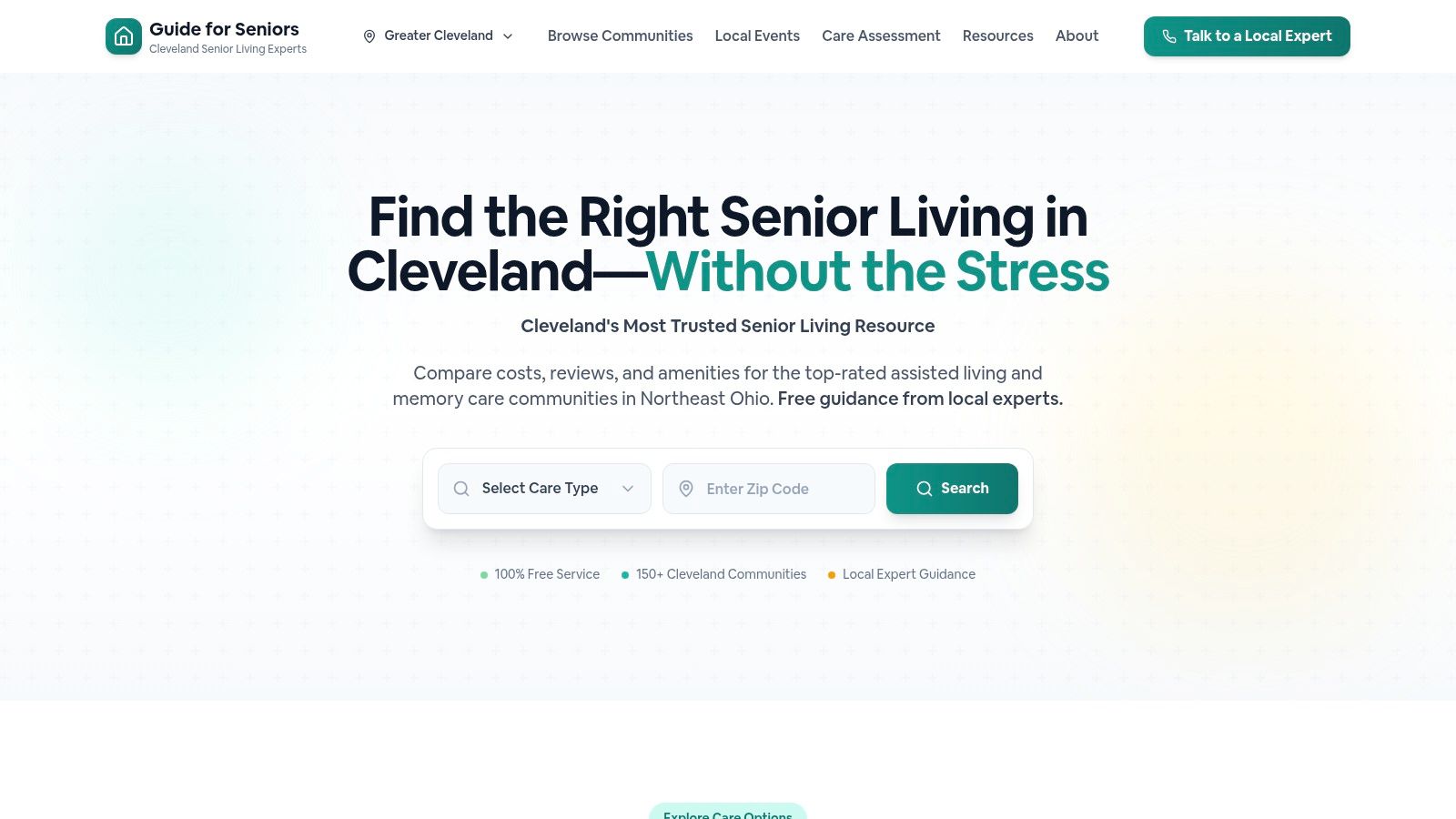
What makes Guide for Seniors a standout choice is its hyper-local focus and insider knowledge. Their advisors aren’t just call center operators; they are Northeast Ohio locals who visit communities, understand the nuances of East Side versus West Side preferences, and know which facilities have the best track records for specific care needs. This on-the-ground intelligence is invaluable, especially when a quick, informed decision is critical after a hospital stay at the Clinic.
Key Features and How They Help
The platform is designed to move you from research paralysis to a confident decision, often within a week.
-
Local, Vetted Expertise: Advisors personally visit and review hundreds of communities across Greater Cleveland. They provide unbiased insights on everything from staffing ratios and Ohio Department of Health (ODH) survey results to the quality of the dining experience. This saves you from discovering potential red flags after you've already invested time in a tour.
-
Personalized Matching Process: The service begins with a quick, 2-minute care assessment. Based on your specific needs (clinical requirements, budget, location preferences, social interests), an advisor curates a short list of the most suitable communities, complete with transparent pricing and current availability.
-
Financial Guidance and Transparency: Navigating costs is one of the biggest stressors. Guide for Seniors provides clear breakdowns of base rent versus level-of-care fees. They also offer a downloadable Cleveland Senior Care Cost Guide and expert advice on funding options like the Ohio Medicaid Assisted Living Waiver and VA Aid & Attendance benefits. To better understand local pricing trends, you can explore their detailed 2025 breakdown of assisted living costs in Cleveland, Ohio.
-
Coordinated Logistics: Once you’ve narrowed your choices, your advisor handles tour scheduling, acts as your advocate during visits, and helps you ask the tough questions that brochures won't answer.
Practical Benefits for Cleveland Families
Using a local advisor provides a distinct advantage. For example, a family in Solon spent three weeks touring facilities, only to find out their top choice didn't accept the AL Waiver. A quick check with a local advisor would have saved them that time, fuel, and emotional energy. This insider perspective ensures you’re only considering viable, high-quality options from day one.
Pros & Cons
| Strengths | Considerations |
| -------------------------------------------------------------------------------------------------------------- | -------------------------------------------------------------------------------------------------------------- |
| Completely Free Service: Families pay nothing; the service is compensated by its partner communities. | Community-Paid Model: This model, standard in the industry, can create a perceived conflict of interest. |
| Local, On-the-Ground Vetting: Advisors offer real-world insights beyond what marketing materials show. | Geographically Focused: Expertise is concentrated in Northeast Ohio, not suitable for nationwide searches. |
| Fast, Personalized Matches: A simple three-step process quickly narrows down hundreds of options. | |
| High User Satisfaction: Rated 4.8/5 by over 500 local families, demonstrating consistent, positive results. | |
Website: https://www.guideforseniors.com
2. A Place for Mom
A Place for Mom is one of the largest and most well-known online marketplaces for senior living in the nation. For families specifically looking for assisted living near Cleveland Clinic Main Campus, its main value lies in its extensive network of partner communities and the free, personalized support provided by their Senior Living Advisors. Instead of cold-calling individual facilities, you can use this platform to quickly generate a list of potential options within a tight radius of the hospital.
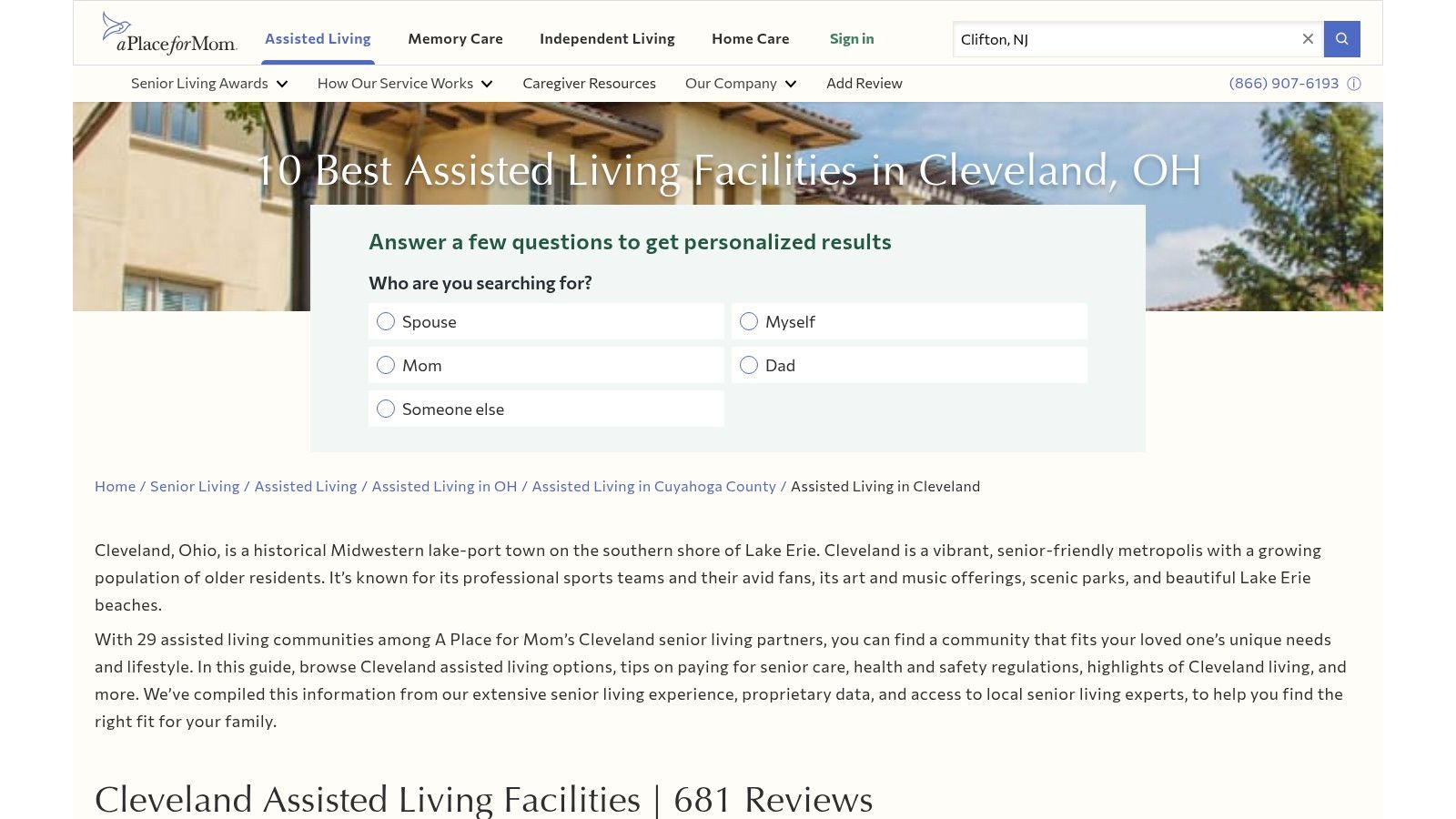
This service is especially useful for hospital discharge planners and families facing a sudden need to find care. An advisor can coordinate multiple tours in a short timeframe, saving families from the logistical headache of scheduling. The website itself offers robust filters for care level, budget, and desired amenities like pet-friendly policies, allowing for a highly customized initial search.
How It Works for Your Search
The process begins by browsing listings, which often include photo galleries, family reviews, and sometimes even floor plans. To get specific costs, you submit a request, which connects you with a local advisor. This human touch is the platform's key differentiator; the advisor learns about your loved one's care needs, budget, and geographic preferences to curate a shortlist of suitable communities.
Pros:
-
Deep Inventory: Extensive listings throughout Greater Cleveland and its surrounding suburbs.
-
Free Advisor Service: There is no cost to families for the personalized matching and tour scheduling service.
-
Efficiency: Streamlines the process of requesting pricing and booking tours at multiple locations.
Cons:
-
Incomplete Pricing: Many listings show vague pricing (e.g., "starts at $X,XXX") until you engage with an advisor.
-
Partner Network: The site only features communities that have a contractual relationship with them, so not every facility in the Cleveland area will be listed.
For more guidance on what factors to weigh when you receive your list of options, review our detailed guide on how to choose an assisted living community.
Website: https://www.aplaceformom.com/assisted-living/ohio/cleveland
3. Caring.com
Caring.com is a robust national directory that excels in providing deep local context for families searching for assisted living near Cleveland Clinic Main Campus. Its primary advantage lies in its extensive collection of verified consumer reviews, allowing families to gauge the real-world experiences of residents and their loved ones. This feature is invaluable when trying to understand the day-to-day culture and care quality of a community beyond its marketing materials.
The platform provides a strong foundation for initial research, especially for those in the early stages of comparing communities in neighborhoods like University Circle, Fairfax, and the surrounding suburbs. Its side-by-side comparison tool and city-level rankings offer a structured way to evaluate options based on ratings, amenities, and available care types.
How It Works for Your Search
You can begin your search by browsing their "Best Assisted Living in Cleveland" lists or by filtering the directory based on your specific needs. Each listing aggregates reviews, photos, and basic information. To get detailed pricing or to schedule a tour, you use straightforward contact forms that connect you directly with the community or with one of Caring.com's Family Advisors. A key feature is the wealth of educational content on their site, including articles that break down how to use Medicaid, VA benefits, or long-term care insurance to pay for care in Ohio.
Pros:
-
Extensive Review Volume: The sheer number of consumer reviews provides candid insights into staffing, food quality, and resident life.
-
Helpful Educational Content: Strong articles and guides on financing options, including the Ohio Medicaid Assisted Living Waiver and VA benefits.
-
Direct Contact Forms: It’s simple to request pricing and availability information from multiple communities at once.
Cons:
-
Sponsored Placements: Be aware that some facilities pay for enhanced placement in search results, which can influence visibility.
-
Inquiry-Based Pricing: Like other platforms, transparent, all-inclusive pricing is rarely listed upfront and requires you to submit your contact information.
To ensure you're asking the right financial questions after using the platform, see our guide on understanding assisted living costs in Ohio.
Website: https://www.caring.com/senior-living/assisted-living/ohio/cleveland
4. Seniorly
Seniorly offers a modern, map-based marketplace that is particularly effective for those who want to visually search for communities in specific Cleveland neighborhoods. When searching for assisted living near Cleveland Clinic Main Campus, its clean interface allows you to quickly compare options in nearby areas like University Circle, Shaker Square, and Midtown, often with starting prices displayed upfront. This feature provides a valuable first glance at affordability before you invest time in tours or calls.
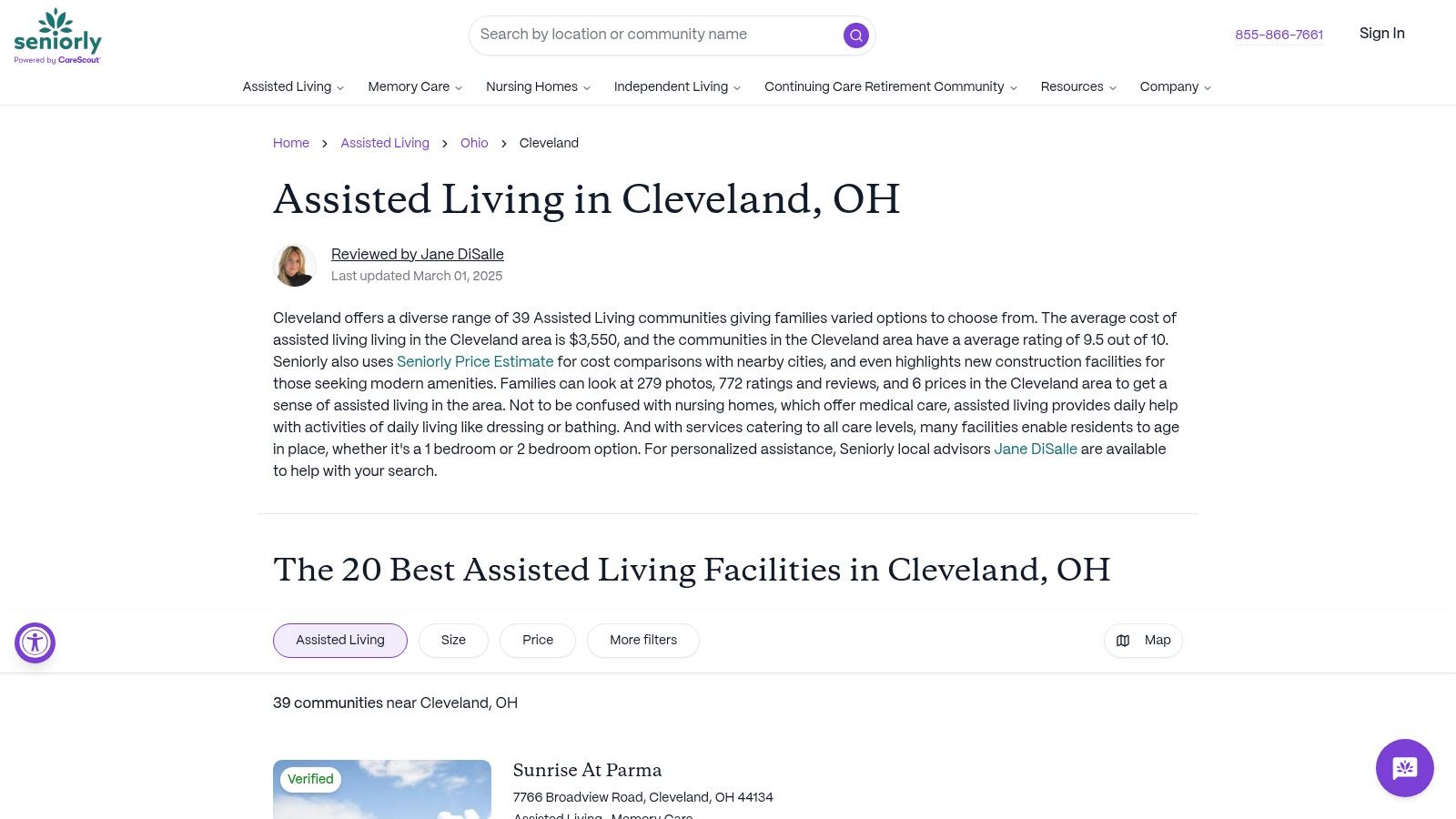
The platform is designed for users who appreciate a more self-directed initial search, with detailed community profiles featuring photo galleries, amenity lists, and "community score" summaries. For families needing more guidance, Seniorly also provides an optional connection to a local advisor who can help create a shortlist of communities and coordinate tours, blending a digital-first approach with personalized support.
How It Works for Your Search
You can begin your search by using the map feature to zero in on the exact radius around the Cleveland Clinic that meets your needs. Many listings prominently feature "starts at" pricing, which helps in making initial budget-based decisions. Each community page acts as a comprehensive digital brochure, consolidating key details in one place. If you find communities you like, you can request more information or connect with an advisor to arrange the next steps.
Pros:
-
Visible Starting Prices: Many listings include starting monthly rates, allowing for quick and clean price comparisons.
-
Neighborhood-Specific Search: The map-based search is excellent for narrowing options to specific Cleveland neighborhoods.
-
Optional Advisor Support: You can browse independently or choose to engage with a local advisor for hands-on assistance.
Cons:
-
Inconsistent Pricing Data: Not every community on the platform publishes its pricing, so some listings still require a direct inquiry.
-
Thinner Inventory: Its network, while growing, may have fewer options in some of the outer Cleveland suburbs compared to larger national platforms.
To better understand the all-in costs, remember to ask about separate "level of care" fees, which are added to the base rent.
Website: https://www.seniorly.com/assisted-living/ohio/cleveland
5. Ohio Health care Association Facility Finder
The Ohio Health Care Association (OHCA) offers a statewide facility finder that acts as a comprehensive, non-commercial directory. For families seeking assisted living near Cleveland Clinic Main Campus, its greatest strength is the ability to filter for communities that accept Ohio’s Assisted Living Medicaid Waiver. This makes it an essential tool for those navigating Medicaid planning or requiring specialized care that might not be advertised on pay-to-play marketing websites.
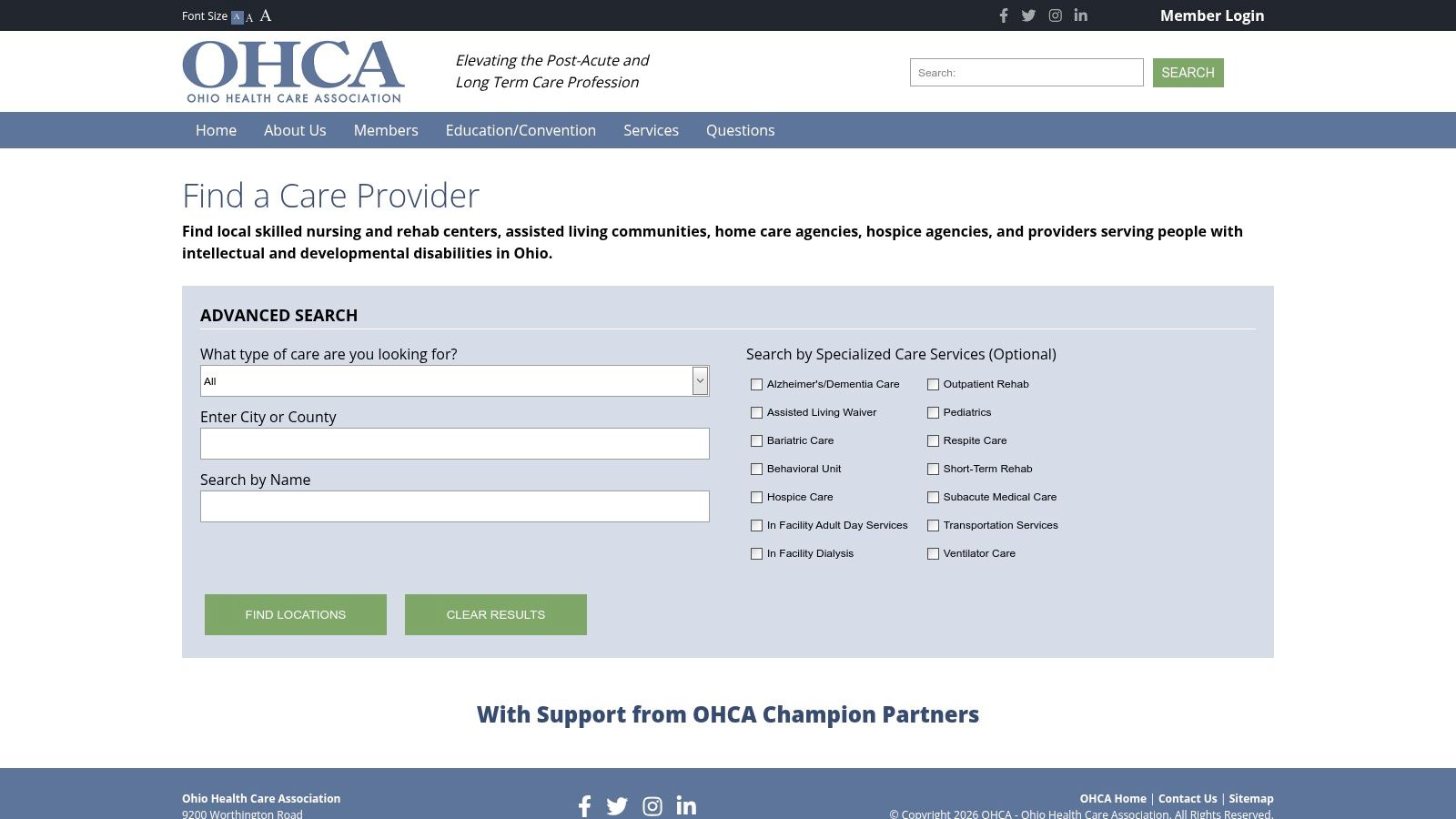
Unlike referral services, the OHCA finder is a direct database of licensed providers. It allows you to search by city or county and then narrow the results with filters for services like dementia care, respite stays, or transportation. This direct approach is particularly helpful for hospital discharge planners who need to quickly verify if a community can accommodate a patient's specific care needs and payment source, especially the Medicaid Waiver.
How It Works for Your Search
Using the finder is straightforward. You select "Assisted Living" as the facility type and enter "Cleveland" or a specific suburb. From there, you can apply filters, with the "Assisted Living Medicaid Waiver" checkbox being the most critical for families concerned with long-term affordability. Each listing provides the facility’s name, address, and direct phone number, allowing you to bypass a third-party advisor and contact them immediately to check for bed availability and pricing.
Pros:
-
Medicaid Filter: The easiest way to generate a list of communities in Cuyahoga County that participate in the Assisted Living Medicaid Waiver program.
-
Association-Backed: The directory is maintained by a professional association, offering a broad view beyond just partner communities of a marketing service.
-
Direct Contact: Provides phone numbers to call facilities directly, which is crucial for verifying real-time availability.
Cons:
-
No Pricing or Reviews: The site does not list costs or include consumer reviews, requiring you to research and vet each option independently.
-
Basic Interface: The search functionality is less user-friendly and lacks the detailed profiles found on commercial platforms.
For a family in Shaker Heights, this tool could quickly identify a list of Medicaid-approved communities, saving them from calling dozens of private-pay-only facilities. However, they would still need to make numerous calls to gather pricing and schedule tours.
Website: https://www.ohca.org/pages/facility_finder.aspx?utm_source=openai
6. Ohio Assisted Living Association – Find a Community
The Ohio Assisted Living Association (OALA) offers an essential, state-specific tool for families researching care options. As the state's trade association, its primary value for those seeking assisted living near Cleveland Clinic Main Campus is its credible, Ohio-focused directory. This resource is particularly powerful for families navigating the complexities of Medicaid, as it provides clear context on the state's Assisted Living Waiver program.
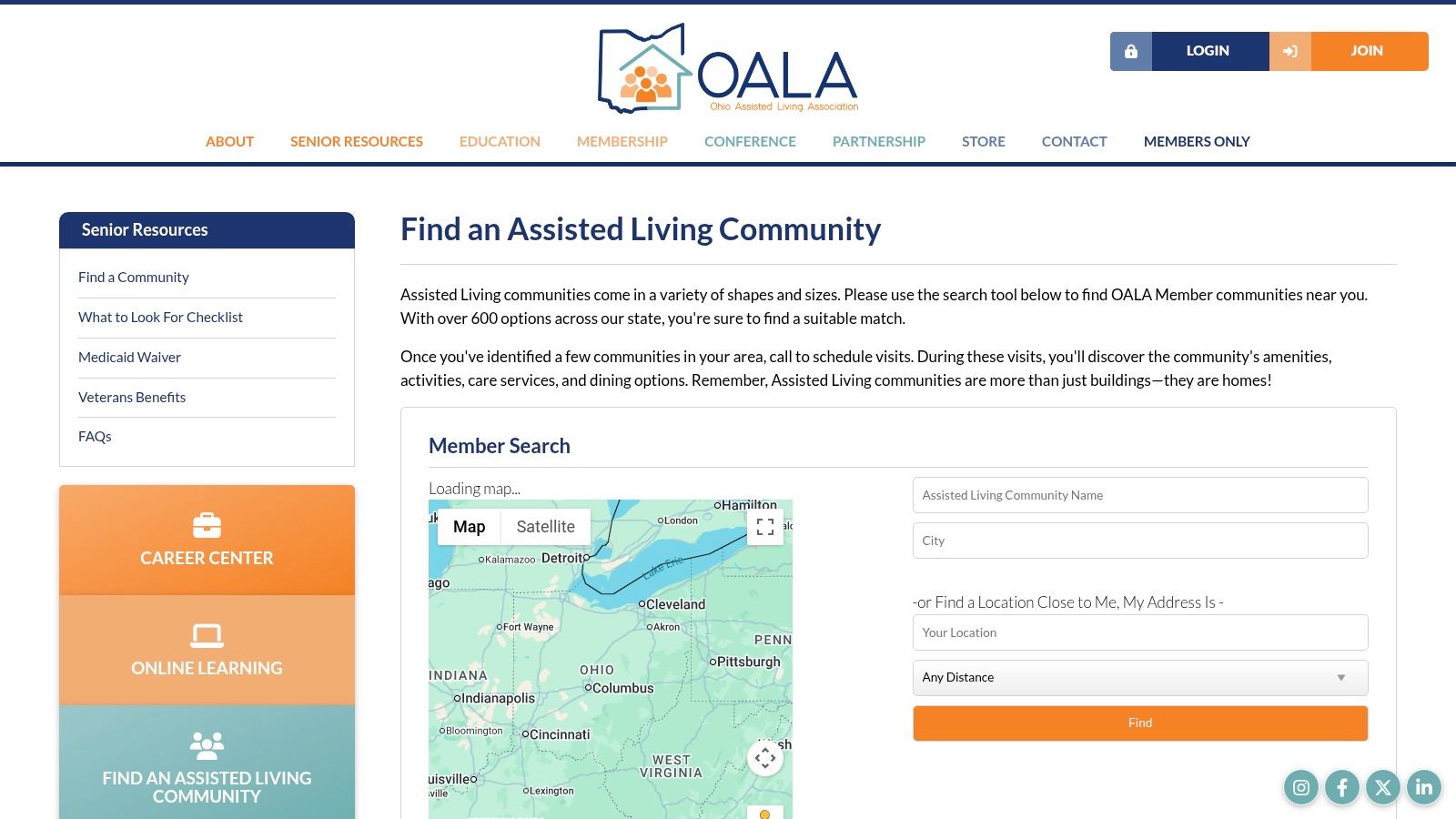
Unlike national search engines that feature paid partners, the OALA directory lists its 600-plus member communities across the state. This makes it an excellent complementary tool to verify if a community you're considering is part of the state association. Its resource hub also includes valuable checklists and guides on what to look for during a tour, framed within Ohio's specific regulations.
How It Works for Your Search
The OALA website features a straightforward "Find a Community" locator tool. Users can search by city, county, or zip code to generate a list of member facilities. Each listing typically provides direct contact information, a link to the community’s website, and a list of services offered. This direct-access approach allows you to contact communities without going through a third-party advisor.
Pros:
-
Ohio-Specific Focus: All information is tailored to Ohio regulations and communities, providing a credible local perspective.
-
Medicaid Waiver Information: Offers up-to-date context on the Ohio Assisted Living Waiver, including recent updates about memory care coverage.
-
Direct Contact: Provides direct phone numbers and websites for communities, bypassing referral fees or intermediaries.
Cons:
-
Member-Only Directory: The tool only lists OALA member communities, so it is not a comprehensive list of every assisted living facility in the Cleveland area.
-
Lacks Consumer Reviews: The platform does not feature family reviews or detailed ratings, focusing instead on factual listings.
For families planning to use Medicaid, understanding the state-specific rules is critical. You can learn more about how Ohio's program works and what it covers by reading our guide to Medicaid for assisted living in Ohio.
Website: https://www.ohioassistedliving.org/aws/OALA/pt/sp/community?utm_source=openai
7. Alzheimer’s Association & AARP Community Resource Finder
For families whose primary concern is dementia or memory support, the Alzheimer’s Association & AARP Community Resource Finder is an essential, unbiased starting point. Unlike referral agencies, this platform is a neutral, non-commercial directory designed to connect users with a wide range of local resources. When searching for assisted living near Cleveland clinic Main Campus, its real value is the direct connection to the Alzheimer’s Association Cleveland Area Chapter and its dedicated, specialized support systems.
This tool is especially powerful for caregivers who need more than just a list of facilities; they need guidance, education, and access to local programs. The platform is powered by HealthLink Dimensions and allows you to search by ZIP code for specific care types like memory care, adult day services, and in-home care, providing a broader look at the entire care ecosystem in Greater Cleveland. The inclusion of the 24/7 Helpline is a critical feature for families facing a crisis or needing immediate advice on dementia-related behaviors.
How It Works for Your Search
You begin your search by entering a ZIP code (like 44106 for the University Circle area) and selecting the type of service you need, such as "Assisted Living/Residential Care." The results provide a list of local providers with basic contact information and a map. The platform’s key differentiator is its integration with Alzheimer's Association resources. Alongside community listings, you can find information on local support groups, educational workshops, and connect directly with the Cleveland Area Chapter for personalized guidance.
Pros:
-
Strong Dementia Focus: The platform is backed by leading experts in Alzheimer’s care, offering unparalleled educational resources.
-
Neutral Directory: It lists a wide range of providers and is not limited to paid partners, offering a more comprehensive initial view.
-
Local Chapter Support: Direct access to the Alzheimer’s Association Cleveland Area Chapter and its 24/7 Helpline for specialized guidance.
Cons:
-
Informational Only: The tool is a directory; it does not vet communities or assist with scheduling tours or negotiating rates.
-
Inconsistent Data: Providers self-maintain their listings, so details like pricing, photos, and current bed availability are often missing and must be verified directly.
Website: https://www.communityresourcefinder.org/Alz/About?utm_source=openai
7-Resource Comparison: Assisted Living Near Cleveland Clinic
| Service | 🔄 Implementation complexity | ⚡ Resource requirements | ⭐📊 Expected outcomes | 💡 Ideal use cases | Key advantages |
|---|---:|---|---|---|---|
| Guide for Seniors | Low — concierge-led three-step process | Minimal family effort; advisors handle vetting & scheduling | Fast, high-quality local matches (most within a week) ⭐📊 | Cleveland-area families; hospital discharge planners; quick local placement | Free to families; in-person vetting; neighborhood pricing guide |
| A Place for Mom | Medium — national platform with advisor support | Moderate — advisor-assisted but may need inquiry for pricing | Rapid tour coordination and broad inventory; pricing transparency varies ⭐📊 | Rapid post-discharge tours; tight-radius searches near Cleveland Clinic | Large inventory; free advisors; easy scheduling workflows |
| Caring.com | Low–Medium — directory with comparison tools | Moderate — relies on review analysis and family outreach | Strong consumer insights and shortlist quality via many reviews ⭐📊 | Shortlisting by resident/family experience; financing research | Verified reviews; side-by-side comparisons; educational content |
| Seniorly | Low — modern marketplace, map-based search | Low–Moderate — many listings show "from" prices for quick screening | Clear price/neighbor comparisons; good for value vs. rating decisions ⭐📊 | Neighborhood-focused searches (e.g., University Circle, Shaker Square) | Visible starting prices; clean comparisons; optional local advisor |
| Ohio Health Care Association Facility Finder | Medium — association directory with filters | Higher — requires direct contact to confirm beds/pricing | Comprehensive licensed-provider list; strong for Medicaid/Waiver identification 📊 | Medicaid Waiver planning; finding specialized services (dementia, respite) | Filter by Waiver participation & specialized services; authoritative statewide data |
| Ohio Assisted Living Association – Find a Community | Medium — member locator and resource hub | Moderate — families must verify; uses member-only listings | Broad member coverage (600+); useful Waiver & reimbursement context 📊 | Waiver planning; families needing state-specific assisted-living guidance | Credible Ohio-focused source; Waiver explanations; member locator |
| Alzheimer’s Association & AARP Community Resource Finder | Low — national, informational finder | Low — search/helpline backed; provider data self-maintained | Neutral, dementia-focused referrals with helpline support 📊⭐ | Memory care/dementia-first searches; callers needing guidance and referrals | Dementia expertise; 24/7 helpline; neutral (non-paid) listings |
Stop Researching Alone. Start Getting Answers.
You've seen the websites. You could spend the next week clicking through lists, filling out contact forms, and waiting for salespeople to call you back. But the core challenge will remain: you're still the one trying to translate marketing jargon, decipher confusing pricing, and guess which community is really the right fit for someone you love.
The true cost of doing this alone isn't just time; it's the emotional drain and the risk of a costly mistake.
Cleveland Scenario: The Cost of Inaction
A family from Solon spent three weeks touring beautiful communities on the East Side, only to find out their top choice didn't accept the Ohio Assisted Living Waiver for their mom's level of care. A quick, 15-minute call with a local advisor would have identified this mismatch immediately, saving them hours of driving and days of false hope.
Instead of being a librarian of information, you need a concierge—a local expert who does the heavy lifting for you.
Your Next Step: The "Concierge Close"
Move from endless researching to finding a real solution. The online tools are fine for getting a feel for the landscape, but they are no substitute for real-time, local expertise. Here's your action plan:
Questions to Ask Your Advisor (Not the Sales Director):
-
"Can you provide an all-in cost estimate, including base rent and all potential care fees, for these three communities?"
-
"Which of these facilities have the best reputation among nurses at University Hospitals or the Cleveland Clinic?"
-
"What are the weekend staffing ratios like, and is there a nurse on-site 24/7?"
-
"Can you check the latest ODH (Ohio Department of Health) survey results for any serious citations?"
Insider Tip: The "Community Fee" is a one-time, upfront cost that can range from $1,500 to $5,000. It is often negotiable. Ask your advisor how to approach this conversation.
Choosing an assisted living community near Cleveland Clinic Main Campus is a monumental decision, but it doesn’t have to be a solitary struggle. The goal is to find a safe, supportive, and financially sustainable home. Partnering with a local expert transforms a stressful search into a guided, confident journey. You gain an advocate who works for you, ensuring the final choice is the right one.
Pricing and availability change daily. Don't guess. Speak to a Cleveland-based Senior Advisor at Guide for Seniors for free to narrow your list and get a current Rate Sheet for communities near the Cleveland Clinic. Get personalized, no-cost assistance by visiting Guide for Seniors.
Disclaimer: This article is for informational purposes only and does not constitute medical or legal advice.
Find Medicaid-Approved Communities Near You
Looking for a facility that accepts the Ohio Medicaid Assisted Living Waiver? Browse communities in these Cleveland suburbs:
Medicaid waiver communities on Cleveland's west side
East side communities accepting Ohio Medicaid
Affordable Medicaid options in south suburbs
Near-west Medicaid-approved communities
Southwest suburban Medicaid facilities
Central location with waiver-approved care
Need help navigating Medicaid? Our local advisors provide free guidance →
Need Help Finding Senior Living in Greater Cleveland?
Our Greater Cleveland local advisors compare pricing, schedule tours, and answer your questions — completely free.