Assisted Living vs. Independent Living: A Cleveland Family's Guide
-
TL;DR: The Core Difference
-
Independent Living is a lifestyle choice for active seniors who don't need daily personal care. Think of it as a convenient, social apartment community without home maintenance.
-
Assisted Living is a healthcare choice for seniors who need help with daily tasks like bathing, dressing, and medications. In Ohio, these are state-licensed Residential Care Facilities.
-
The Key Factor is the need for hands-on help. If your loved one needs any personal care assistance, a licensed assisted living community is the appropriate option.
Who This Guide Helps
This guide is for families in Greater Cleveland (including Cuyahoga, Lake, Lorain, Geauga, Medina, and Summit counties) who feel overwhelmed comparing senior living options. If you're short on time and need clear, practical information to make a confident decision for a loved one, this is for you.
Key Takeaways
-
Licensing Matters: In Ohio, Assisted Living (Residential Care Facility) is licensed and inspected by the Ohio Department of Health (ODH). Independent living is not. This is the most important legal and safety distinction.
-
Costs Are Different: Independent living is typically one monthly fee. Assisted living has a base rate for room and board, plus separate level-of-care fees based on how much help a resident needs.
-
Ohio's AL Waiver: For those with limited funds, the Medicaid Assisted Living Waiver (AL Waiver) can help pay for the care services in assisted living, but it does not cover room and board. Eligibility is based on strict medical and financial limits.
Your Quick Guide To Senior Living In Northeast Ohio
For families in Greater Cleveland, trying to figure out the right senior living option can feel overwhelming. This guide gives you clear, calm answers about assisted living versus independent living, breaking down what each one offers, who it’s best for, and the real costs involved for Ohio families.
We'll walk through checklists and practical examples to help you feel confident in your decision. Our only goal is to give you the facts you need to make an informed choice, free from sales pressure.
Nationally, these two options form the backbone of senior care. The U.S. has about 32,231 assisted living communities with nearly 1.2 million beds. Independent living is a close second, offering over 756,000 units for active seniors. You can explore more data on senior living trends to see the bigger picture.
This quick visual breaks down the core differences between housing-focused independent living and care-focused assisted living.
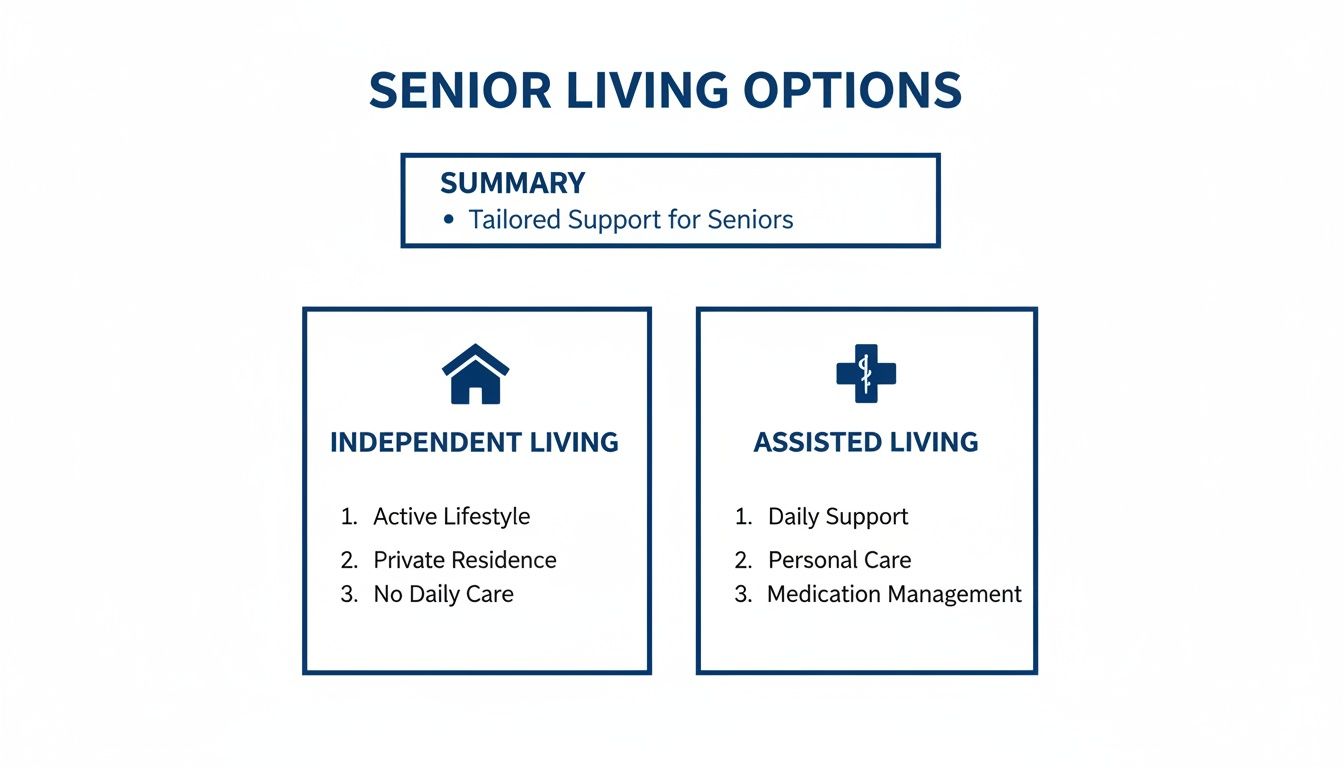
(Image alt text: A diagram comparing Independent Living and Assisted Living options for seniors, detailing key features of each.)
The key takeaway is that while both provide a great sense of community, only assisted living is designed and licensed to deliver personal healthcare support.
Independent Living vs. Assisted Living At A Glance
For families across Cuyahoga, Lake, Lorain, and surrounding counties, understanding the basic framework is the best first step.
| Feature | Independent Living | Assisted Living (Residential Care Facility) |
| :--- | :--- | :--- |
| Primary Focus | Social engagement, convenience, active lifestyle. | Personal care, safety, daily health support. |
| Level of Care | None provided; residents manage their own health. | Help with bathing, dressing, grooming, medications. |
| Licensing in Ohio | Not licensed by the Ohio Department of Health (ODH). | Licensed and inspected by the ODH. |
| Ideal Resident | Active seniors who can live independently. | Seniors needing some daily assistance but not 24/7 nursing. |
| Staffing | Hospitality staff, activity directors, maintenance. | Nurses (LPNs/RNs) and trained caregivers on-site 24/7. |
| Cost Structure | Monthly rental fee for housing and amenities. | Monthly base rate plus level-of-care fees based on need. |
Essentially, your choice comes down to whether your loved one needs a maintenance-free social environment or a setting that includes a safety net of personal care.
The Core Differences: Understanding Senior Living in Ohio
When you start comparing independent living vs. assisted living, the most important difference in Ohio is state licensing. This isn't just a technicality—it determines the level of care a community is legally allowed to provide, which is crucial for your family's safety.
Think of independent living as a lifestyle choice. It's for active seniors tired of home maintenance who want the convenience of community life. These are essentially apartment complexes with amenities. They are not licensed healthcare settings and are not regulated by the Ohio Department of Health (ODH).
Assisted Living (Residential Care Facility), on the other hand, is a licensed healthcare environment. In Ohio, these communities operate under the strict oversight of the ODH. That license is the key; it gives them the legal authority to provide personal care services like helping with bathing, dressing, and managing medications.
Regulation and Staffing: What It Means for Care
The gap in regulation between the two is huge. An independent living community acts like a landlord, providing housing and activities. Since they aren't licensed, they cannot offer hands-on care.
An assisted living community is held to high state standards for staffing, safety, care planning, and medication management. This oversight adds a vital layer of protection.
What this means for you: If your loved one needs any help with activities of daily living (ADLs)—even if it seems minor—a state-licensed assisted living community is the only appropriate choice. This guarantees they are in a regulated environment with trained staff.
Day-to-Day Services and Staffing
This legal distinction shapes the daily experience. Independent living communities are staffed for hospitality: activity directors, dining staff, and maintenance. Residents manage their own healthcare.
Assisted living is built around a care model. These communities employ nurses (LPNs or RNs) and have trained caregivers on-site 24/7 to help residents. This team creates personalized care plans, administers medications, and responds to needs around the clock.
The demand for both options is strong. Recent data from the National Investment Center for Seniors Housing & Care shows that independent living facilities have an average national occupancy of 89.0%, just ahead of assisted living at 85.8% (as of Q4 2023). This highlights how many active older adults are seeking a more community-focused lifestyle.
A Quick Comparison of Services
-
Meals and Dining
-
Independent Living: Typically includes one restaurant-style meal per day, with residents using their own full kitchens for others.
-
Assisted Living: Usually provides three meals a day, with staff available to assist residents as needed.
-
Help with Bathing and Dressing
-
Independent Living: Not available. Residents must hire a private home health aide if they need this help.
-
Assisted Living: A core service provided by trained staff as part of a resident's care plan.
-
Medication Management
-
Independent Living: Residents are 100% responsible for managing their own medications.
-
Assisted Living: A licensed nurse oversees the process to ensure every dose is given correctly and on time.
-
Emergency Response
-
Independent Living: Often has a pull-cord system that alerts office staff or an on-call manager.
-
Assisted Living: Has trained care staff physically present in the building 24/7 for an immediate, hands-on response.
Comparing Costs And Payment Options In The Cleveland Area
For most Northeast Ohio families, the biggest question is how to pay for senior living. Understanding how pricing works and what your payment options are is key to finding a sustainable solution.
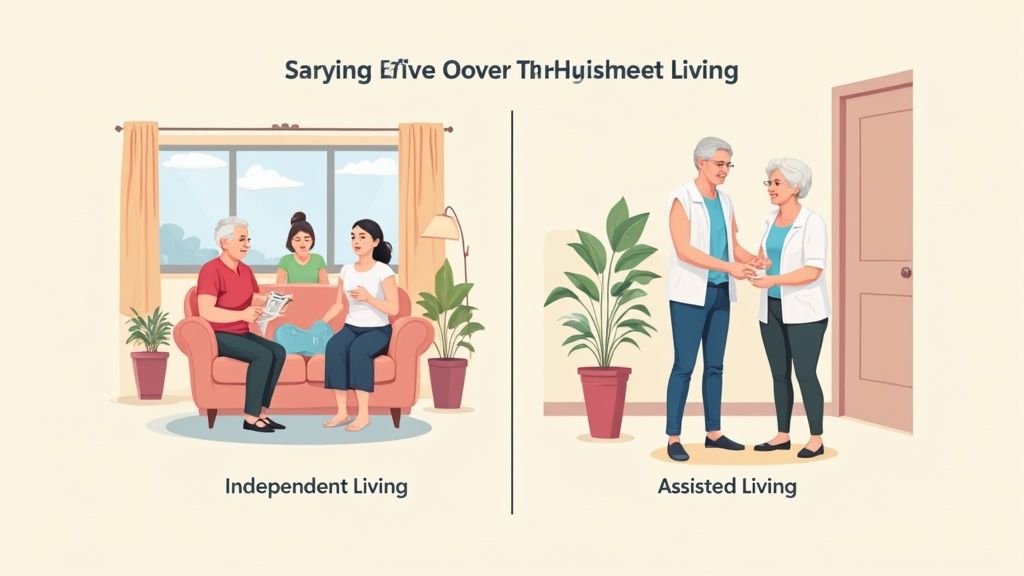
While both are a significant investment, their costs are structured differently. Independent living is like an all-inclusive lifestyle package, while assisted living adds personalized healthcare services on top.
(Image alt text: An image comparing independent living and assisted living for seniors, showing distinct daily life scenarios.)
With independent living, you typically pay a straightforward monthly fee covering rent, utilities, and amenities. Assisted living pricing is more complex because it includes hands-on care.
Understanding Assisted Living Cost Structures
In assisted living, the monthly bill is almost always broken into two parts: the base rate and level-of-care fees. It's crucial to ask communities to separate these costs for a true comparison.
-
Base Rate: Covers the apartment, three meals a day, housekeeping, laundry, and all social and recreational activities.
-
Level-of-Care Fees: An extra monthly charge based on the specific amount of hands-on help a resident needs. Someone who only needs medication reminders will pay much less than someone who needs daily assistance with bathing, dressing, and mobility.
-
One-Time Fees: Most communities also charge a one-time community fee upon move-in. This non-refundable fee covers apartment preparation and administrative costs.
What this means for you: When you tour a community in Cuyahoga or Lake County, ask for a clear breakdown of their care levels. Ask how they assess a resident’s needs and what might trigger a move to a higher (and more expensive) care level. This helps you budget for the future and avoid surprises.
For a deeper dive into local pricing, check our complete guide on senior living costs in Cleveland.
How Cleveland Families Pay For Senior Living
While many use private funds from savings or the sale of a home, several other resources can make assisted living more affordable. Independent living, since it's not a healthcare service, is almost always paid for privately.
| Payment Method | What It Is | Who It Helps | Where to Start in Ohio |
| :--- | :--- | :--- | :--- |
| Private Funds | Personal savings, pensions, Social Security, home sale proceeds. | The most common way families pay for both types of senior living. | Talk with a financial advisor to create a long-term care budget. |
| Long-Term Care Insurance | An insurance policy designed to cover long-term care services. | Individuals who purchased a policy years before needing care. | Review your policy for its elimination period and daily benefit amount. |
| VA Aid & Attendance | A monthly pension benefit for qualifying wartime veterans and their surviving spouses. | Veterans with limited income who need help with daily activities. | Contact your county's Veterans Service Office for free assistance. |
| Medicaid AL Waiver | The Medicaid Assisted Living Waiver helps pay for care services in assisted living. | Ohioans who meet strict financial and medical eligibility criteria. | Contact your local Area Agency on Aging (AAA) to begin the process. |
Example: Cuyahoga County family using the AL Waiver
A widow in Parma has a small pension and Social Security, putting her just over the income limit for the AL Waiver. Her family works with an elder law attorney to set up a Qualified Income Trust (QIT), also known as a "Miller Trust." Her income now flows into the trust, which pays for her share of costs (like room and board), making her financially eligible for the waiver. The AL Waiver then pays the assisted living community directly for her personal care services.
When To Choose Assisted Living Over Independent Living
<iframe width="100%" style="aspect-ratio: 16 / 9;" src="https://www.youtube.com/embed/zR_scvn-tzQ" frameborder="0" allow="autoplay; encrypted-media" allowfullscreen></iframe>How do you know when the social benefits of independent living aren't enough anymore? The answer lies in observing small but consistent changes in a loved one's ability to safely manage their daily life.
This shift isn't about a single incident. It's about recognizing a pattern of struggles that point to a need for the hands-on support you'll only find in assisted living. This is a proactive choice to enhance safety, protect health, and improve their quality of life.
Recognizing the Signs That More Support Is Needed
The clues often surface in routine moments. These aren't personal failings—they are signals that their needs are evolving beyond what an independent living community can handle.
-
Difficulty with Personal Care: Are they struggling with basic grooming, bathing, or dressing? Unkempt hair, noticeable body odor, or wearing the same clothes for days can be signs they need help with these essential Activities of Daily Living (ADLs).
-
Medication Mismanagement: Are you finding unopened pill bottles or noticing they've forgotten critical medications? Even small mistakes can lead to serious health problems.
-
Changes in Health and Mobility: Unexplained weight loss could mean cooking has become too difficult. An increase in falls, new bruises, or a noticeable struggle to get up from a chair are major safety red flags.
What this means for you: Seeing these signs doesn't mean it's time to panic. It means it's time for a calm, supportive conversation about finding a living arrangement with a stronger safety net. The goal is to add support, not take away independence.
A Practical Checklist for Cleveland Families
Use this checklist to objectively look at the situation. It helps organize your thoughts and bases the conversation on facts, not just emotions.
| Area of Concern | Observable Sign (Check all that apply) |
| :--- | :--- |
| Personal Hygiene | ☐ Neglecting bathing or showering<br>☐ Difficulty with dressing or grooming<br>☐ Body odor or poor oral hygiene |
| Nutrition & Health | ☐ Significant weight loss or gain<br>☐ Spoiled food in the fridge<br>☐ Little or no fresh food in the house |
| Medication Safety | ☐ Forgetting to take medications<br>☐ Taking incorrect dosages<br>☐ Unable to manage refills |
| Mobility & Safety | ☐ Recent falls or fear of falling<br>☐ Unexplained bruises or injuries<br>☐ Struggling to get out of chairs or bed |
| Household & Finances| ☐ Piles of unopened mail or unpaid bills<br>☐ A messy or cluttered home environment<br>☐ Forgetting to turn off appliances |
| Social & Cognitive | ☐ Withdrawing from friends or activities<br>☐ Increased confusion or memory lapses<br>☐ Loss of interest in hobbies |
If you're checking multiple boxes, it’s a strong signal that it’s time to explore the supportive environment of assisted living. To see local options, you can learn more about licensed assisted living in Cleveland and what different communities offer.
How To Evaluate And Tour Communities In Your Area
Once you've decided on the right type of care, the next step is finding the right community. This involves some online research first, followed by in-person tours with the right questions. When you’re prepared, you can see beyond the beautiful lobby and get a real feel for daily life.

(Image alt text: A family stands next to a checklist with checked medicine items and a 'Withdrawal' note.)
Researching A Community Before You Visit
Before scheduling tours, check a community’s official record. This is a non-negotiable step for verifying safety.
In Ohio, every Assisted Living (Residential Care Facility) is licensed and inspected by the Ohio Department of Health (ODH). You can—and should—look up any facility’s license status and read their latest inspection reports online. These surveys give you an unbiased look at how well the community follows state rules on everything from staffing to safety.
What this means for you: An inspection report is public record. A "citation" means a state surveyor found an issue. A minor paperwork error is very different from a serious care-related problem. The report will also show if the community has corrected the issue, which is just as important.
It's also good to know that these state inspections are different from those for Skilled Nursing Facilities (nursing homes). Nursing homes are regulated federally by the Centers for Medicare & Medicaid Services (CMS) and have a more medically-focused inspection process.
What To Observe During Your Tour
When you walk into a community, use all your senses to observe the reality of daily life.
-
Staff and Resident Interactions: Are caregivers stopping to chat warmly with residents? Listen to how staff speak to people—is it with respect and patience?
-
Cleanliness and Odors: The building should be clean and smell fresh. Pay attention to common areas and residential hallways.
-
Resident Engagement: Are people active and engaged, or are most sitting alone? Ask to see the activity calendar, then check if those events are actually happening.
-
The Dining Experience: If possible, visit during a meal. Does the food look appealing? The dining room is a great window into the social heart of the community.
Essential Questions To Ask On Your Tour
Walking in with a list of questions is a game-changer. For a complete list, our comprehensive senior living tour checklist is a printable guide you can take with you.
| Category | Key Questions to Ask |
| :--- | :--- |
| Care & Staffing | • What is your staff-to-resident ratio during the day? What about overnight? <br> • How do you create a resident's care plan, and how often is it updated? <br> • What specific training does your care staff receive (e.g., for dementia)? |
| Costs & Contracts | • Can you give me a written breakdown of the base rate and all possible care fees? <br> • What, exactly, is included in the rate, and what costs extra? <br> • Under what circumstances would a resident be asked to leave? |
| Dining & Activities| • How do you handle special diets or food preferences? <br> • Can we see a complete activity calendar for this month? <br> • Do you provide transportation for doctor's appointments? |
| Safety & Communication | • What is your procedure for a medical emergency? <br> • How do you communicate with families about health changes? <br> • Who is my main point of contact if I have a question or concern? |
What to Do Next
Feeling swamped is normal. This section is your roadmap—a way to turn research into a clear, manageable plan. By taking it step by step, you can move forward with confidence.

(Image alt text: A multi-generational family inspects a home, with one man using a magnifying glass.)
Here are a few concrete steps your family can take right now.
-
Use the Needs Checklist. Go back to the checklist in this guide. Sit down as a family and fill it out honestly. This simple exercise gives you a fact-based foundation to match your loved one’s needs to the right level of care.
-
Check AL Waiver Eligibility. If finances are a concern, contact the Western Reserve Area Agency on Aging (WRAAA). They are the starting point in Cuyahoga, Geauga, Lake, Lorain, and Medina counties for assessing eligibility for the Medicaid AL Waiver.
-
Read an Inspection Report. Before you tour, look up one local assisted living community on the Ohio Department of Health website. Reading a real survey report will prepare you to ask smarter questions about safety and staffing.
-
Book Your First Tour. The best way to understand the difference between assisted living and independent living is to experience them. Schedule a tour at a local community just to get a feel for the atmosphere.
Essential Resources for Cleveland-Area Families
-
Western Reserve Area Agency on Aging (WRAAA): The front door for many state-funded programs, including the AL Waiver. They serve Cuyahoga, Geauga, Lake, Lorain, and Medina counties.
-
Ohio Long-Term Care Ombudsman: Your advocate for residents' rights. If you ever have a concern about care quality, the Ombudsman program investigates complaints and helps resolve issues. You can find your local ombudsman online.
-
Ohio Department of Health: Use their online portal to check the license status and view the latest inspection reports for any assisted living community in the state.
Disclaimer: This article is informational and not legal, financial, or medical advice. Please consult licensed professionals for guidance on your specific situation.
#
<!-- FAQ rendered separately -->Need Help Finding Senior Living in Greater Cleveland?
Our Greater Cleveland local advisors compare pricing, schedule tours, and answer your questions — completely free.