How to Choose the Right Assisted Living Floor Plan in Cleveland
An assisted living floor plan is more than just a blueprint. It's a design that blends the independence of a private apartment with essential safety features for older adults. Unlike a standard apartment, these layouts are all about accessibility—think wider doorways, walk-in showers, and easy-to-reach emergency call systems. For families in Cleveland and across Northeast Ohio, understanding these floor plans is a key step toward finding a safe and comfortable new home for a loved one.
This guide is for families in the Greater Cleveland area who are feeling overwhelmed by senior living options. We’ll provide clear, calm, and solution-oriented advice to help you make a confident choice.
-
TL;DR: Key Insights
-
Prioritize Safety Over Size: Focus on features like walk-in showers, grab bars, and wide doorways, which are more critical than total square footage.
-
Match the Layout to Lifestyle: A studio is great for a social, active person, while a one-bedroom offers more privacy for those who enjoy hosting visitors.
-
Memory Care is Different: Specialized layouts with circular hallways are designed to reduce stress for residents with dementia and are not the same as standard assisted living.
-
Use the In-Person Tour to Verify: Bring a tape measure to your tour to check doorway widths (aim for 36 inches) and confirm the apartment's location relative to amenities.
Disclaimer: This article provides general information and is not a substitute for professional legal, financial, or medical advice. Please consult with licensed professionals for guidance on your specific situation.
Who This Guide Helps
This guide is designed for families in Cuyahoga, Lake, Lorain, Geauga, Medina, and Summit counties who are comparing senior living options. If you're feeling stressed and short on time, this resource will give you a straightforward way to evaluate and compare assisted living apartments.
Key Takeaways
-
Layouts Impact Daily Life: The choice between a studio, one-bedroom, or companion suite affects privacy, cost, and ease of navigation.
-
Accessibility is Non-Negotiable: Features like zero-threshold showers and emergency call systems are essential for safety and independence.
-
Location Within the Community Matters: An apartment's proximity to the dining room and activity areas can be just as important as the layout itself.
-
Memory Care Design is Purposeful: The unique layouts in memory care communities are a core part of the care strategy, designed to support residents with cognitive decline.
Comparing Common Assisted Living Layouts
When you start looking at communities for Assisted Living (Residential Care Facility), you'll find apartment layouts generally fall into a few common types. Thinking about your loved one’s personality, their daily routine, and your family's budget will make it easier to decide between a studio, a one-bedroom, or a companion suite. The goal of these designs is to balance independence with easy access to care.
Studio and Alcove Apartments
The studio apartment is the most common layout you'll see. It's an efficient, all-in-one living space with one open room for sleeping and living, a small kitchenette, and a private bathroom. It's a practical design that's easy to manage, making it a good fit for someone who plans on being active in the community.
An alcove studio is a variation with a small nook or L-shape for a bed, creating a sense of separation between sleeping and living areas without the extra cost of a one-bedroom.
-
Best For: Someone who wants a simple, easy-to-manage space, is mindful of the budget, or expects to be very social.
-
Keep in Mind: There is limited privacy for hosting guests in one open room.
One-Bedroom Apartments
A one-bedroom apartment is a great choice for those who prefer a more traditional home setup. It offers a completely separate bedroom with a door, which provides much more privacy. This layout is ideal for residents who enjoy hosting family or friends in a dedicated living area. The distinct zones for living and sleeping are also helpful for couples or anyone who values that separation.
What this means for you: A separate bedroom can be a game-changer for maintaining a healthy sleep routine. It creates a quiet, dedicated space for rest, which is important for managing health conditions that might interrupt sleep.
Companion Suites
A companion suite pairs two residents in a larger, shared apartment. The layout usually includes two private bedrooms connected by a shared living room, kitchenette, and bathroom. This is an excellent option for lowering costs while providing built-in company. This setup is ideal for someone who would enjoy a roommate for social connection and mutual support. Communities typically have a thoughtful process to pair residents based on personality and daily habits.
Essential Safety and Accessibility Features
After considering the basic layout, focus on the built-in safety features. These are the core elements that prevent falls, promote independence, and give your family peace of mind. When you look at a floor plan or tour a unit, pay close attention to the details in the bathroom, doorway widths, and flooring. These are signs of a community that prioritizes safety.
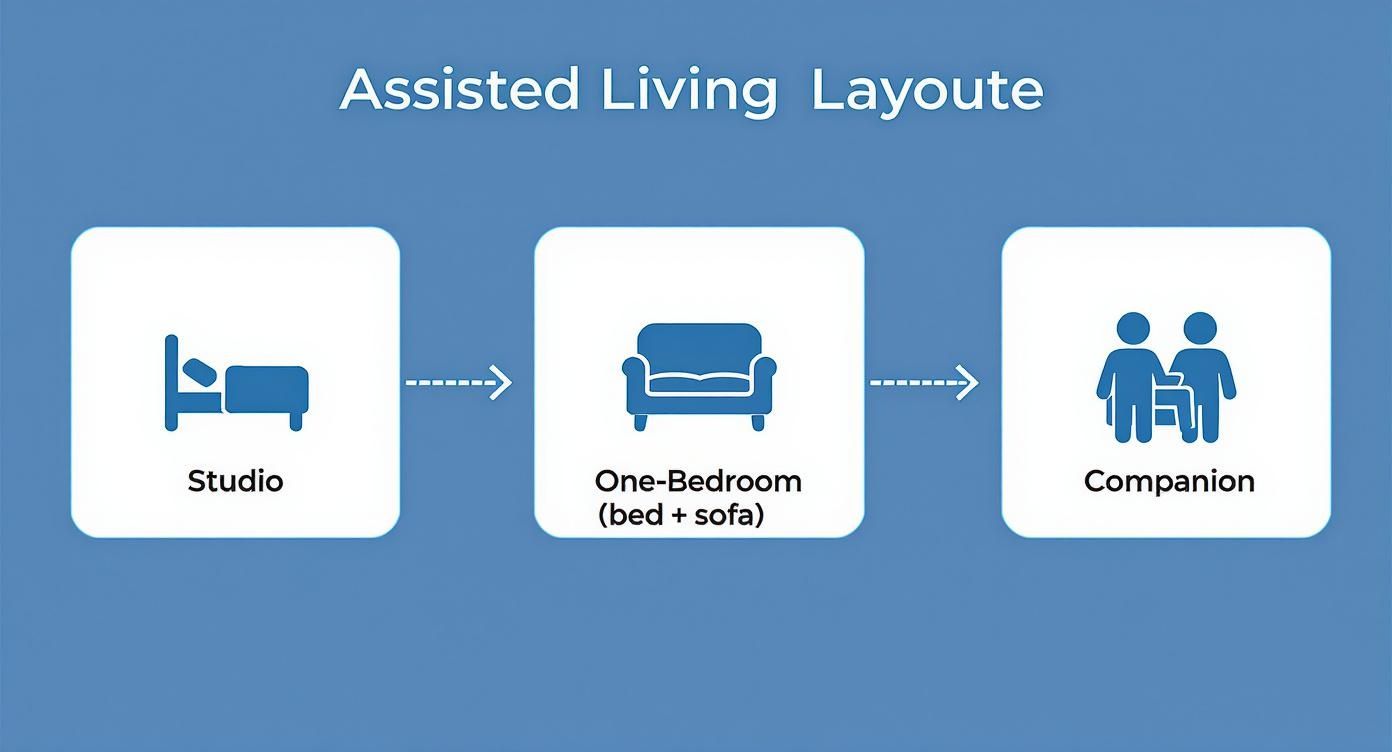
alt text: A simple flowchart illustrating three assisted living floor plan options: a compact Studio, a One-Bedroom with a separate living area, and a Companion suite with two private bedrooms and a shared living space.
The Bathroom Blueprint for Safety
The bathroom is the most critical room for accessibility and a high-risk area for falls. A well-designed bathroom is a necessity, not a luxury.
-
Zero-Threshold Showers: Look for walk-in or roll-in showers with no curb or step. This feature eliminates a major trip hazard and is essential for anyone using a walker or wheelchair. If you're not familiar with the term, learning what a curbless shower is will help you spot this feature.
-
Grab Bars: Sturdy, properly installed grab bars inside the shower and next to the toilet are non-negotiable. They provide crucial stability.
-
Slip-Resistant Flooring: Check for flooring that provides good grip, even when wet, such as textured tiles.
Hallways and Living Space Accessibility
Safety extends beyond the bathroom. The entire apartment should be designed for easy and secure navigation.
What this means for you: Wide doorways and open pathways are fundamental to independence. Being able to move through one's home with a walker or wheelchair without getting stuck is a huge boost to confidence and quality of life.
Key features to check on the floor plan and verify during your tour:
-
Wide Doorways: All doors (apartment, bathroom, closets) should be at least 36 inches wide to accommodate wheelchairs and walkers.
-
Good Lighting: Look for bright, consistent lighting that eliminates shadows where trip hazards could hide. Light switches should be easy to reach.
-
Emergency Call Systems: Identify the location of emergency call buttons or pull cords. They should be in the bedroom and bathroom, placed where someone could reach them after a fall.
Understanding Memory Care Floor Plans

alt text: A well-lit, accessible hallway in a memory care community, featuring resident photos outside doors to aid with recognition.
When a loved one has Alzheimer's or another form of dementia, their environment needs to be specially designed. The floor plan in a memory care community is a key part of the care strategy, built to enhance safety, reduce agitation, and encourage engagement. For example, a long, straight hallway that ends in a dead-end can be disorienting and stressful for someone with dementia. The best memory care designs eliminate this problem.
Purposeful Design for Cognitive Support
The philosophy is that the environment should adapt to the resident. This is achieved through specific architectural choices you should look for on a tour.
-
Circular or Racetrack Hallways: A hallmark of good memory care design, these create a continuous loop that allows residents to walk freely without hitting a frustrating dead end. This turns the urge to wander into a safe activity.
-
Clear Sightlines: Open layouts with clear views into common areas like the dining room or courtyard help residents see what's happening, making them less likely to feel lost and more likely to join in.
-
'Neighborhood' Pods: Many communities are broken into smaller, self-contained “neighborhoods.” Each might have its own dining and living areas for a small group of residents, creating a quieter, more familiar atmosphere that helps prevent overstimulation.
From Blueprint to Well-Being
Small details can make a huge difference. Look for memory boxes outside each resident’s room—small display cases with personal photos and mementos. For someone with memory loss, familiar objects are a much better landmark than a room number.
What this means for you: A well-designed memory care floor plan is directly linked to quality of life. By reducing confusion and anxiety, the community can help improve mood, encourage better sleep, and support the care staff. This design also helps the nursing personnel in assisted living do their jobs more effectively. You can find more data on how staffing and design are linked at ahcancal.org.
Finding the right environment is crucial. To see how these principles look in practice, you can explore our guide on memory care in Cleveland.
How to Analyze and Compare Floor Plans
https://www.youtube.com/embed/OvSPAvG0_A4
Architectural floor plans can seem intimidating, but your goal is to imagine living in the space day-to-day. Look past the total square footage. A larger apartment with an awkward layout can be harder to live in than a smaller, thoughtfully designed one. Practical livability is key. If you need a primer, guides on understanding real estate photography floor plans can help.
Look Beyond Square Footage
The total square footage doesn't tell the whole story. A long hallway or rooms with odd angles might inflate the number but aren't usable living space. Focus on the practical questions:
-
How will furniture fit? Where would the bed go? Is there a good spot for a favorite armchair? Measure essential furniture before you tour.
-
Are the pathways clear? Imagine getting up at night. Is there a clear path from the bed to the bathroom for someone using a walker?
-
Is the storage practical? A deep closet isn't helpful if your loved one can't safely reach what's stored in the back.
Consider the Community Context
An apartment's location within the building is as critical as its layout. A beautiful apartment at the end of a long hallway could be a poor choice for someone with limited mobility.
Example: A Lorain County Family’s Choice
A family was choosing between two one-bedroom apartments for their dad. Unit A was larger but was a five-minute walk from the dining hall. Unit B was smaller but was right around the corner from the main elevator and activity rooms. They chose Unit B because for their dad, easy access to meals and friends was more valuable than extra square feet.
During your tour, walk the path from the apartment to the places your loved one will go every day—the dining room, activity center, and mailroom—to see if the distance is manageable.
Your On-Site Tour Checklist
A floor plan on paper is just the start. The in-person tour brings the space to life. This is your chance to check the critical details that make a difference in daily life. Bring a tape measure and notepad to show you're a serious, informed consumer.
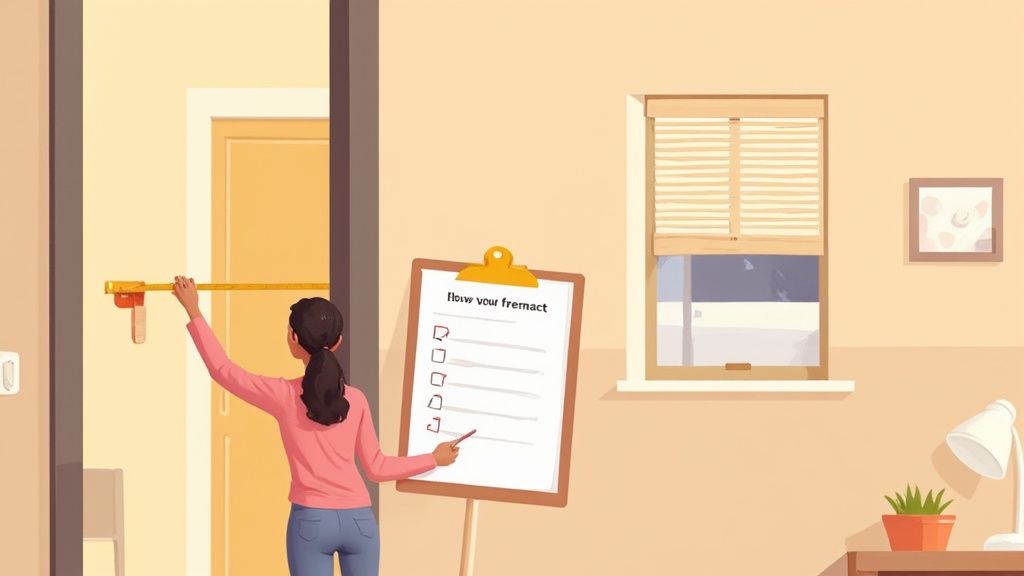
alt text: A caregiver diligently uses a tape measure to check the width of a doorway in an apartment, cross-referencing with a checklist on a clipboard to ensure accessibility standards are met.
Apartment Accessibility Checklist
Use this checklist as you walk through a potential apartment.
| Item to Check | What to Look For | Pass/Fail |
| ----------------------- | -------------------------------------------------------------------------------- | --------- |
| Doorways | Are all doorways at least 36 inches wide to fit a walker or wheelchair? | |
| Flooring Transitions| Are transitions between rooms completely flat with no raised thresholds? | |
| Bathroom Floor | Is the flooring slip-resistant, even when wet? | |
| Shower Entry | Is it a zero-threshold, walk-in design with no curb to step over? | |
| Grab Bars | Are they securely mounted in the shower and next to the toilet? | |
| Toilet Height | Is it a "comfort height" toilet, which is easier to use? | |
| Reachability | Can light switches, outlets, and the thermostat be reached from a seated position? | |
Essential Questions for Staff
Your tour is the perfect time to ask pointed questions about safety and support.
What this means for you: Don’t just ask about the emergency call system—ask for a demonstration. This will show you exactly how your loved one would signal for help and how staff responds. It’s a direct way to gauge emergency protocols and gain peace of mind.
-
"Can you show me exactly how the emergency call system works?"
-
"What are the rules for bringing our own furniture and decorations?"
-
"From this apartment, where are the nearest staff stations, fire exits, and storm shelters?"
-
"Is the thermostat in the apartment controlled by the resident?"
For a more detailed list, download our complete senior living tour checklist to take with you.
What to Do Next
Taking the next step can feel daunting, but breaking it down into manageable actions helps. Here are a few concrete things you can do today:
-
Measure Key Furniture: Before you tour, measure the bed, dresser, and favorite chair your loved one wants to bring. This will help you immediately visualize how they will fit in different floor plans.
-
Schedule Two or Three Tours: Contact a few communities you are interested in and schedule in-person tours. Seeing the spaces yourself is the only way to truly compare them.
-
Check Ohio's Assisted Living Waiver Eligibility: If budget is a concern, investigate financial assistance options. In Ohio, the Medicaid Assisted Living Waiver (AL Waiver) helps cover the cost of care services for eligible individuals. The first step is to contact your local Area Agency on Aging to see if your loved one may qualify.
-
Talk to a Local Advisor: Speaking with someone who knows the Cleveland-area communities can save you time and stress. They can help you narrow down options based on care needs, budget, and preferred location.
#
<!-- FAQ rendered separately -->Need Help Finding Senior Living in Greater Cleveland?
Our Greater Cleveland local advisors compare pricing, schedule tours, and answer your questions — completely free.